
Trash and recycling cans are one of the biggest eyesores on an otherwise nice-looking yard, especially when they sit right next to the driveway or front door where pickup crews can get to them easily. The fix doesn’t have to be expensive: a simple screen, a small wood enclosure or the right planting can hide them without making trash day any harder.
Here’s how to plan a trash can hideaway and 13 ways to build or buy one.
Before You Build: Plan for Access
Whatever you build, leave enough room to lift the lids fully, roll the cans out on pickup day, and hose them out occasionally. A gate or removable panel on the front is worth the extra effort over a fixed wall, since you’ll open it every single week.
Check your local ordinance too. Some cities and HOAs have rules about where cans can sit and how tall a fence or enclosure near the street can be.
1. Simple Lattice Screen
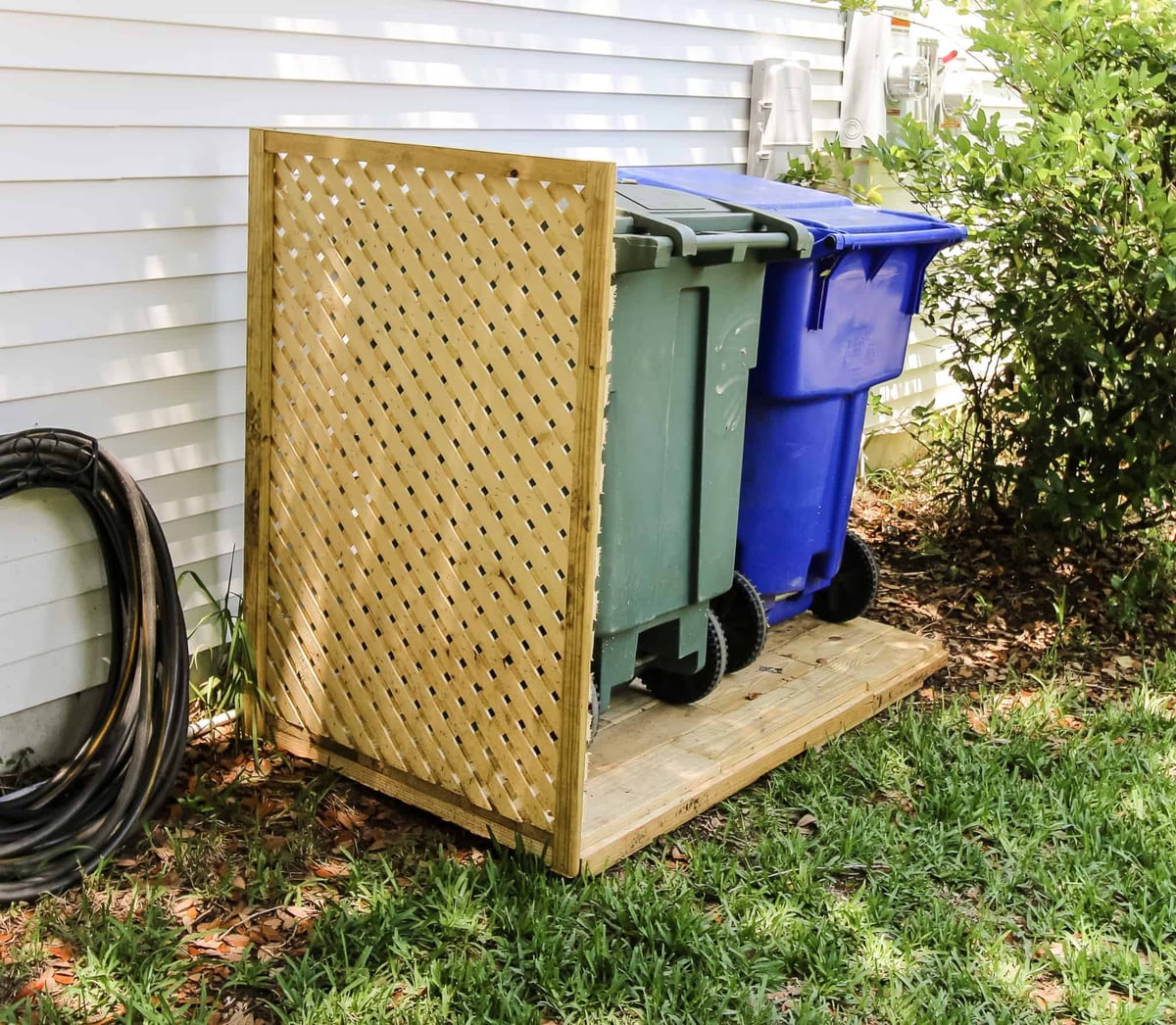
A freestanding lattice panel, framed in 1×2 lumber and set on two or three posts, blocks the view of the cans from the street or the neighbor’s yard without fully boxing them in. It’s one of the cheapest options and lets air circulate so cans don’t get musty.
You’ll need:
- Lattice panel
- 1×2 or 1×4 lumber for the frame
- Fence posts
2. Three-Sided Wood Enclosure
Build a simple U-shaped frame from pressure-treated 2x4s and cover it with cedar fence pickets, leaving the front open for access. This is the most common DIY trash enclosure and can be sized to fit two or three cans side by side.
You’ll need:
- Pressure-treated 2x4s
- Cedar fence pickets
- Concrete deck blocks for the base
3. Enclosure With a Hinged Gate
Add a simple hinged gate, built the same way as the side panels, to the front of a three-sided enclosure so the whole thing closes up on non-pickup days. This is the better choice for a front yard where the cans are visible most of the time.
You’ll need:
- Same materials as the three-sided enclosure
- Exterior hinges and a gate latch
4. Pallet Enclosure
Two or three wood pallets, stood on end and screwed together at the corners, make a nearly free enclosure. Sand any rough edges and add a coat of exterior stain or paint so it doesn’t look like scrap wood sitting in the yard.
You’ll need:
- 2–3 wood pallets
- Exterior screws
- Stain or paint
5. Vinyl or Composite Fence Panel Box

Vinyl and composite fence panels never need repainting and hold up to weather better than wood, which makes them a good choice if the enclosure will sit against the house all year. Frame a simple box shape and top it with a matching gate panel.
You’ll need:
- Vinyl or composite fence panels
- Metal or vinyl post frame
- Gate hardware
6. Tall Shrubs or Evergreen Screen
A row of tall, dense shrubs planted along the side of the cans, such as arborvitae or boxwood, blocks the view within a season or two and needs almost no maintenance once established. This works best when the cans sit along a side yard rather than right next to the front door.
You’ll need:
- 3–5 evergreen shrubs
- Mulch
7. Climbing Vine Trellis
Set a simple trellis panel in front of or beside the cans and train a fast-growing vine, such as clematis or morning glory, up it. By midsummer the trellis is a green wall instead of an obvious screen.
You’ll need:
- Trellis panel
- Climbing vine
- Garden stakes
8. Corrugated Metal Enclosure
Corrugated metal panels, the same material used for modern fencing and siding, make a sleek, low-maintenance enclosure that fits a contemporary house. Frame it in steel or pressure-treated wood posts and screw the panels on with rubber-washer screws.
You’ll need:
- Corrugated metal panels
- Wood or steel posts
- Rubber washer screws
9. Painted Cinder Block Enclosure

Stack cinder blocks into a low U-shaped wall, mortar them in place, and finish with exterior paint or stucco to match the house. This option is the most permanent and holds up well in areas with strong wind.
You’ll need:
- Cinder blocks and mortar
- Exterior paint or stucco
10. Repurposed Storage Shed
A small resin or wood storage shed, sized for two or three cans, keeps them fully out of sight and out of the weather, and doubles as extra storage for yard tools on the shelves above. This is a pricier option but needs the least ongoing upkeep.
You’ll need:
- Small storage shed
- Level gravel or paver base
11. Wheeled Cart Cabinet
Build or buy a slatted wood cabinet on locking caster wheels sized to fit the cans, so the whole unit rolls to the curb on pickup day instead of you pulling the cans out individually. This works especially well for a long driveway.
You’ll need:
- Slatted wood panels
- Locking caster wheels
12. Wall-Mounted Privacy Screen
If the cans sit against the side of the garage or house, a single flat privacy screen panel mounted on brackets can hide them from the driveway view without needing a full three-sided box. This is the fastest and cheapest option on the list.
You’ll need:
- Privacy screen panel
- Wall mounting brackets
13. Decorative Woven Willow or Reed Panels

Woven willow, reed or bamboo fencing panels, zip-tied to a simple frame, give an enclosure a natural, cottage-style look and cost less than most wood options. They typically last 2 to 4 years outdoors before needing replacement.
You’ll need:
- Woven willow or reed panels
- Wood or metal frame
- Zip ties or wire
Tips for a Trash Can Enclosure That Lasts
- Leave a gap at the bottom so air moves through and odors don’t build up.
- Set it on gravel or pavers rather than bare dirt so cans don’t sink or the wood doesn’t rot from ground contact.
- Keep it a few inches larger than the cans on every side, since it’s much harder to squeeze a full can in and out than it looks on paper.
- Add a hook or bungee inside to keep animals from tipping cans over if the enclosure isn’t fully enclosed.
FAQ
What is the cheapest way to hide trash cans? A simple wall-mounted privacy screen panel or a lattice screen usually costs the least and takes a single afternoon.
How much space do I need for an enclosure? Measure your cans and add at least 3 to 4 inches on each side and enough overhead clearance to lift the lids fully.
Will an enclosure keep animals out of the cans? A sturdy latched gate helps, but raccoons and dogs can still get into cans without locking lids, so pair the enclosure with cans that have a secure lid if animal access is a problem.
Can I attach an enclosure to my house? Yes, a lean-to style enclosure that shares a wall with the garage or house is one of the sturdiest and cheapest options, since you only need to build three sides.
For more outdoor projects, see our guides on septic tank landscaping ideas and cheap patio ideas.