
A single well-placed tree does more for fall curb appeal than any amount of porch decor. The trick is picking a species suited to your zone and yard size, since a tree is a decades-long commitment, not a seasonal display you can swap out next year.
Below are reliable trees for fall color across most of the country, along with the zone, mature size and foliage color for each so you can match one to your landscape before you buy.
Sugar Maple
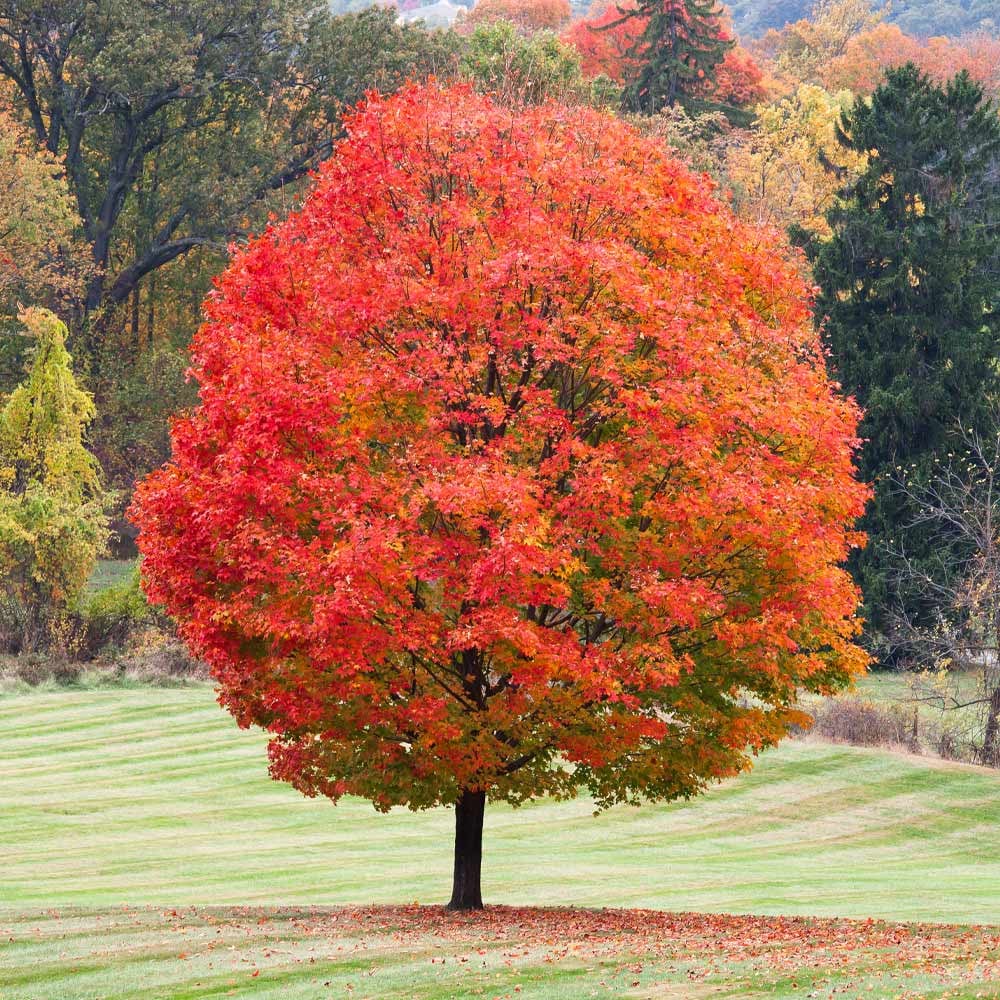
Sugar maple (Acer saccharum) is the tree behind most classic New England fall photos, turning brilliant orange, gold and red, often with all three colors on the same tree at once. It is also the source of maple syrup, tapped in late winter long before the leaves appear.
Hardy in zones 3 through 8, sugar maples grow slowly to 60 to 75 feet tall with an equally wide canopy, so they need real space and are best suited to a large yard rather than a small urban lot.
Red Maple
Red maple (Acer rubrum) turns a consistent, vivid red to orange-red in fall and grows faster than sugar maple, making it a common choice for newer landscapes that want quicker results. Its red flowers and red-tinged twigs give it interest even before fall arrives.
Hardy in zones 3 through 9, red maple reaches 40 to 60 feet tall and tolerates wetter soil than sugar maple, making it a better fit for low-lying yards.
Japanese Maple
Japanese maple (Acer palmatum) is the tree of choice for smaller yards and foreground planting, with delicate, often deeply lobed leaves that turn brilliant red, orange or gold depending on the cultivar. Many varieties already have red or purple foliage all summer, then intensify in fall.
Hardy in zones 5 through 8, Japanese maples typically stay under 25 feet, and many popular cultivars stay much smaller, making them well suited to patios and foundation plantings.
Sweetgum
Sweetgum (Liquidambar styraciflua) produces star-shaped leaves that turn a mix of purple, red, orange and yellow, sometimes with several colors on one tree at the same time. It is a striking fall tree, though it drops spiky seed pods that some homeowners find a nuisance to clean up.
Hardy in zones 5 through 9, sweetgum grows 60 to 75 feet tall and prefers full sun and moist, well-drained soil.
Red Oak
Red oak (Quercus rubra) turns a deep russet-red to reddish-brown in fall and holds its leaves longer into the season than most maples, extending the display into November in many areas. It is also one of the faster-growing oaks, valuable both for looks and as a long-term shade tree.
Hardy in zones 3 through 8, red oak grows 60 to 75 feet tall and needs room for a wide, rounded canopy at maturity.
Sourwood

Sourwood (Oxydendrum arboreum) is a smaller native tree with glossy leaves that turn a rich, consistent red to burgundy in fall, often earlier than other trees in the same yard. It also produces drooping white flower clusters in summer that attract bees.
Hardy in zones 5 through 9, sourwood stays a manageable 20 to 30 feet tall, making it a good fall-color option for smaller properties.
Ginkgo
Ginkgo biloba turns a uniform, bright golden yellow in fall and famously drops nearly all of its leaves within a day or two once the color peaks, unlike most trees that shed gradually. Only male ginkgo trees should be planted, since female trees produce foul-smelling fruit.
Hardy in zones 3 through 8, ginkgo grows slowly to 50 to 80 feet tall and is highly tolerant of urban pollution and poor soil, which is why it is common as a street tree.
Black Tupelo
Black tupelo (Nyssa sylvatica), also called black gum, produces some of the earliest and most reliable fall color of any tree, turning brilliant red, orange, purple and yellow, sometimes all at once on the same branch. It is an underused native tree with genuine four-season interest.
Hardy in zones 3 through 9, black tupelo grows 30 to 50 feet tall and tolerates both wet and dry soil once established.
Serviceberry
Serviceberry (Amelanchier) is a small, multi-season native tree with white spring flowers, edible summer berries and orange to red fall foliage, all on a plant that rarely exceeds 25 feet. It works well as a specimen tree in a small yard or near a patio.
Hardy in zones 4 through 9, serviceberry tolerates part shade better than most fall-color trees, making it useful in yards without full sun.
Flowering Dogwood
Flowering dogwood (Cornus florida) is known for its spring flowers, but its fall show is just as strong, with leaves turning deep red to reddish-purple alongside clusters of red berries that persist after the leaves drop. It stays small enough for almost any yard.
Hardy in zones 5 through 9, flowering dogwood reaches 15 to 25 feet tall and does best in part shade with well-drained, slightly acidic soil.
| Tree | Zones | Mature height | Fall color |
|---|---|---|---|
| Sugar maple | 3-8 | 60-75 ft | Orange, gold, red |
| Red maple | 3-9 | 40-60 ft | Red, orange-red |
| Japanese maple | 5-8 | Under 25 ft | Red, orange, gold |
| Sweetgum | 5-9 | 60-75 ft | Purple, red, orange, yellow |
| Red oak | 3-8 | 60-75 ft | Russet-red |
| Sourwood | 5-9 | 20-30 ft | Red to burgundy |
| Ginkgo | 3-8 | 50-80 ft | Golden yellow |
| Black tupelo | 3-9 | 30-50 ft | Red, orange, purple, yellow |
| Serviceberry | 4-9 | Up to 25 ft | Orange to red |
| Flowering dogwood | 5-9 | 15-25 ft | Deep red to purple |
Choosing the Right Tree for Your Yard

Match mature size to the space you actually have. A sugar maple or red oak needs room to spread 40 feet or more overhead, while a Japanese maple, sourwood or serviceberry fits comfortably near a patio or foundation without outgrowing the spot in ten years.
Check your USDA hardiness zone before buying, and plant in fall or early spring so roots have time to establish before summer heat or winter cold arrives. Water deeply once a week through the first full growing season.
Frequently Asked Questions
What makes fall leaves change color? As daylight shortens and temperatures drop, trees stop producing green chlorophyll, which reveals the orange and yellow pigments that were in the leaf all along, while some trees also produce new red pigments in fall.
Which tree has the most reliable fall color every year? Sugar maple and black tupelo are generally the most consistent, producing strong color most years regardless of weather variation, while sweetgum color can vary more with the season.
Do I need two trees for fall color, like with fruit trees and pollination? No. Fall foliage color does not depend on pollination or a second tree; a single tree of any of these species will color on its own.
How long does peak fall color last? Most trees hold peak color for one to three weeks depending on wind and rain, with ginkgo dropping its leaves especially fast once color peaks.
Picking the right tree for your climate and space is the foundation of a fall landscape that gets better every year. For more ways to round out the yard, see our fall yard decor ideas, root barriers for trees and hand saws for tree pruning.