

Grass seedlings and established turf have fundamentally different nutritional needs. New seedlings draw on phosphorus for root tip cell division in the first 2–3 weeks before the root system is large enough to absorb nitrogen efficiently. A maintenance fertilizer applied to new seedings over-delivers nitrogen before the plant can use it, and under-delivers phosphorus when that’s what the seedling needs most. The NPK ratio difference between a starter formula (high middle number) and a maintenance formula (high first number) reflects this biological reality. At 6BC Botanical Garden, using starter fertilizer through the first mowing, then transitioning to maintenance formula, consistently improves establishment density.
| Scotts Turf Builder Starter Food for New Grass |  |
Best Overall | NPK Analysis: 24-25-4 | Intended Use: New lawns, seeding, sod, plugs | Coverage Area: 5,000 sq. ft. | VIEW LATEST PRICE | Read Our Analysis |
| Jonathan Green Veri-Green Starter Fertilizer 12-18-8 |  |
Root Development Expert | NPK Analysis: 12-18-8 | Intended Use: Seeding, overseeding, sodding | Coverage Area: up to 1,500 sq. ft. | VIEW LATEST PRICE | Read Our Analysis |
| Greenview Spring/Fall Lawn Starter Fertilizer 8 lb | 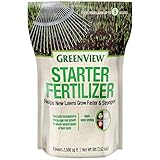 |
Seasonal Starter | NPK Analysis: 10-18-10 | Intended Use: Establishing new lawn, seeding, bare spots | Coverage Area: 2,500 sq. ft. | VIEW LATEST PRICE | Read Our Analysis |
| Scotts Turf Builder Liquid Starter Lawn Fertilizer |  |
Quick-Acting Liquid | NPK Analysis: 7-12-15 | Intended Use: New grass starter (liquid) for seedlings | Coverage Area: 600 sq. ft. (three feedings total) | VIEW LATEST PRICE | Read Our Analysis |
| Scotts Turf Builder Sun & Shade Grass Seed Mix |  |
Seed + Nutrition Combo | NPK Analysis: (seed mix includes root-building nutrition; no explicit NPK listed) | Intended Use: Seeding new lawn or overseeding (sun & shade) | Coverage Area: New lawn 745 sq. ft.; overseeding 2,240 sq. ft. | VIEW LATEST PRICE | Read Our Analysis |
| Scotts Turf Builder Thick’R Lawn Sun & Shade (12 lb.) | 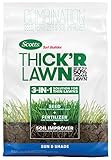 |
Thicker Lawn Solution | NPK Analysis: (combined seed/fertilizer; no explicit NPK listed) | Intended Use: Overseeding / improve thin lawns (seed + fertilizer) | Coverage Area: 1,200 sq. ft. | VIEW LATEST PRICE | Read Our Analysis |
| Andersons Premium New Lawn Starter Fertilizer (18 lb) |  |
Professional Strength | NPK Analysis: 20-27-5 | Intended Use: Starter fertilizer for establishing new turf | Coverage Area: up to 5,000 sq. ft. | VIEW LATEST PRICE | Read Our Analysis |
More Details on Our Top Picks
-
Scotts Turf Builder Starter Food for New Grass
Best Overall
Our Take: 12-18-8 is a balanced establishment ratio — moderate nitrogen for early leaf development while high phosphorus builds root mass. Correct for overseeding into existing turf where new grass must compete quickly with established neighbors.
If you’re establishing a new lawn, this starter fertilizer is your top choice for fast, reliable results. You’ll use Scotts Turf Builder Starter Food for New Grass when planting seed, laying sod, or setting plugs. It’s formulated 24-25-4 to supply the nutrients developing lawns need, and it’s safe for any grass type. Expect new grass up to 70% thicker and establishment about 35% faster compared with unfed areas, improving seeding and sod results. A 15 lb. bag covers roughly 5,000 sq. ft., so you can plan application rates and timing to jumpstart healthy growth.
Our Take: The 24-25-4 ratio front-loads phosphorus nearly equal to nitrogen — unusual for turf, and deliberate. Root tip cell division is the critical early-stage need; nitrogen uptake becomes efficient only after a root mass is established.
- NPK Analysis:24-25-4
- Intended Use:New lawns, seeding, sod, plugs
- Coverage Area:5,000 sq. ft.
- Package Size / Weight:15 lb.
- Root Development Focus:Promotes establishment and root development
- Application Timing / Frequency:Use when planting new grass or reseeding (one-time at establishment)
- Additional Feature:High nitrogen ratio
- Additional Feature:5,000 sq. ft. coverage
- Additional Feature:Safe for any grass
-
Jonathan Green Veri-Green Starter Fertilizer 12-18-8
Choose Jonathan Green Veri-Green Starter Fertilizer when you want faster establishment—it’s a root development expert for new turf. You’ll get a 12-18-8 formula in a 5 lb bag that covers up to 1,500 sq. ft., designed specifically for seeding, overseeding, and sodding. Apply at seeding time in spring or fall—even the same day as laying seed or sod. High phosphorus encourages deep, dense roots while humates boost nutrient availability and efficiency. It feeds new grass for up to two months. Use a rotary, drop, or hand-held spreader and ensure even distribution for best results.
- NPK Analysis:12-18-8
- Intended Use:Seeding, overseeding, sodding
- Coverage Area:up to 1,500 sq. ft.
- Package Size / Weight:5 lb.
- Root Development Focus:Phosphorus-rich formula promotes deep root development
- Application Timing / Frequency:Apply same day as seeding/sodding (best in spring/fall)
- Additional Feature:Contains humates
- Additional Feature:Feeds up to 2 months
- Additional Feature:Best for spring/fall
-
Greenview Spring/Fall Lawn Starter Fertilizer 8 lb
Homeowners seeding in spring or fall will find this seasonal starter ideal for new lawns and bare spots. You’ll get an 8 lb bag that covers 2,500 sq. ft., designed for one-time use at planting. Apply just before or after seeding to encourage root growth and help seedlings absorb nutrients while roots establish. Its 10-18-10 NPK delivers both immediate-release and time-released nitrogen, so you get feeding that continues up to eight weeks. Use it for establishing new turf, filling bare spots, or overseeding in recommended seasons to give young grass a reliable early boost.
Our Take: Fall is superior for cool-season grass seeding — moderate temperatures support germination without summer weed competition. Starter fertilizer timing should align with seeding date: apply immediately before or after seeding, not weeks earlier.
- NPK Analysis:10-18-10
- Intended Use:Establishing new lawn, seeding, bare spots
- Coverage Area:2,500 sq. ft.
- Package Size / Weight:8 lb.
- Root Development Focus:Encourages root growth while roots develop
- Application Timing / Frequency:One-time use in spring or fall; apply just before/after seeding
- Additional Feature:Time-release nitrogen
- Additional Feature:Continuous feeding 8 weeks
- Additional Feature:2,500 sq. ft. coverage
-
Scotts Turf Builder Liquid Starter Lawn Fertilizer
Gardening pros and busy DIYers will love this quick-acting liquid starter for new lawns. You’ll apply Scotts Turf Builder Liquid Starter Lawn Food (32 fl. oz., 7-12-15) with a reusable hose-end sprayer in about 10 minutes. Its phosphorus boosts early root development, nitrogen greening and growth, and potassium helps new turf adapt. One bottle covers up to 600 sq. ft. with three weekly feedings after seedlings sprout. The translucent bottle shows usage, and the applicator is refill-compatible to cut plastic waste. Manufacturer warranty and most retailers’ 30-day returns back your purchase.
- NPK Analysis:7-12-15
- Intended Use:New grass starter (liquid) for seedlings
- Coverage Area:600 sq. ft. (three feedings total)
- Package Size / Weight:32 fl. oz. (bottle; 8.32 oz item weight)
- Root Development Focus:Phosphorus promotes early root development
- Application Timing / Frequency:Apply weekly for three weeks after seedlings sprout
- Additional Feature:Hose-end spray applicator
- Additional Feature:Three feedings per bottle
- Additional Feature:Quick 10-minute application
-
Scotts Turf Builder Sun & Shade Grass Seed Mix
If you want a reliable mix for varied light, this seed + nutrition combo helps lawns establish quickly. You’ll get a 5.6 lb bag that covers 745 sq ft for new lawns or 2,240 sq ft for overseeding, designed for full sun and moderate to dense shade. Plant in spring or fall when soil averages 55–70°F, keep soil surface moist until seedlings reach two inches, and use a Scotts spreader per label settings. The blend includes root-building nutrition for deeper roots, promotes thick green turf with medium drought resistance and good durability. Warranty and 30-day returns available.
Our Take: All-in-one seed and fertilizer products fix the fertilizer rate to the seed rate. If your soil needs more phosphorus than the built-in formula provides, supplementing with a standalone starter fertilizer increases establishment success.
- NPK Analysis:(seed mix includes root-building nutrition; no explicit NPK listed)
- Intended Use:Seeding new lawn or overseeding (sun & shade)
- Coverage Area:New lawn 745 sq. ft.; overseeding 2,240 sq. ft.
- Package Size / Weight:5.6 lb
- Root Development Focus:Root-building nutrition to establish deep roots
- Application Timing / Frequency:Best planted in spring or fall; keep soil moist until 2″ tall
- Additional Feature:Seed + fertilizer combo
- Additional Feature:Sun and shade blend
- Additional Feature:Soil temperature guidance
-
Scotts Turf Builder Thick’R Lawn Sun & Shade (12 lb.)
Need a quick, reliable fix for patchy turf? Scotts Turf Builder Thick’R Lawn Sun & Shade (12 lb.) combines grass seed, fertilizer, and a soil improver so you can overseed and feed in one pass. It covers about 1,200 sq. ft., works in sun or shade, and promises up to 50% thicker lawn with proper care. Prep by mowing low, raking, and removing debris, then apply with a Scotts spreader at label settings. Keep the soil surface moist daily for two weeks, then water regularly. Best used late spring and again late summer/early fall for optimal results.
- NPK Analysis:(combined seed/fertilizer; no explicit NPK listed)
- Intended Use:Overseeding / improve thin lawns (seed + fertilizer)
- Coverage Area:1,200 sq. ft.
- Package Size / Weight:12 lb.
- Root Development Focus:Includes fertilizer to enhance root development
- Application Timing / Frequency:Overseed late spring and late summer/early fall (follow watering until germination)
- Additional Feature:3-in-1 solution
- Additional Feature:Overseed twice yearly
- Additional Feature:Uses Scotts spreader settings
-
Andersons Premium New Lawn Starter Fertilizer (18 lb)
Choose Andersons Premium New Lawn Starter when you want professional-strength results for new turf establishment. You’ll get an 18 lb bag of granules (20-27-5) designed for new lawns, covering up to 5,000 sq ft. Use it in spring or fall on all turf types to promote vigorous seedlings and strong root development. The formula blends quick- and slow-release nitrogen with phosphorus for roots, potassium for turf health, essential micronutrients, and 1% iron for deeper greening. Follow label directions for proper rates and application methods. It’s a reliable starter if you need sustained, predictable establishment.
- NPK Analysis:20-27-5
- Intended Use:Starter fertilizer for establishing new turf
- Coverage Area:up to 5,000 sq. ft.
- Package Size / Weight:18 lb.
- Root Development Focus:Phosphorus for root establishment; promotes vigorous seedlings
- Application Timing / Frequency:Ideal application in spring and fall for new lawns
- Additional Feature:Includes micronutrients
- Additional Feature:1% iron content
- Additional Feature:Quick + slow-release nitrogen
Factors to Consider When Choosing a Starter Fertilizer for Grass Seed Ideas
Before you pick a starter fertilizer, check your soil’s phosphorus levels so you apply what’s needed without overdoing it. Match the fertilizer to your grass species, choose a nutrient release type that fits your maintenance plan, and time the application within the ideal planting window. Also consider bag size and coverage so you get the right amount for your lawn without waste.
Soil Phosphorus Needs
How much phosphorus your new lawn needs depends on the existing soil P level, since phosphorus drives seedling root development and starter fertilizers usually boost the middle number in N‑P‑K for that reason. Check a current soil test: most labs report available P in ppm, and new lawns benefit when P is low (roughly below 10–15 ppm on common tests). If your soil test shows adequate or high P (commonly above 20–30 ppm), adding starter phosphorus gives little benefit and can increase runoff risk. Match starter rates to the measured P and the product label to avoid overapplication—excess P won’t speed root growth and accumulates. Also confirm local rules: many areas restrict P use unless tests show deficiency.
Grass Species Compatibility
When selecting a starter fertilizer, match the formula to the grass species so you give seedlings the right nutrients without encouraging weak top growth or wasting phosphorus; cool‑season grasses usually benefit from higher P for root establishment, while warm‑season and phosphorus‑sensitive species do better with lower‑P or balanced starters, and seed size and vigor also dictate whether you should use gentler, lower‑burn formulations or a stronger blend. For cool‑season lawns (Kentucky bluegrass, perennial rye, fescues) choose a starter with a moderate middle number to boost roots in spring or fall. For warm‑season turf (bermuda, zoysia, centipede), avoid excess P unless a soil test indicates need; balanced N and K work well. Use low‑P, mild formulas for fine fescues and tiny seeds to prevent burn and nutrient waste.
Nutrient Release Type
One of the most important choices you’ll make is the nutrient release type—starter fertilizers usually pair fast‑acting, water‑soluble nitrogen for quick green‑up with slow‑release forms that feed seedlings steadily over weeks. You’ll get immediate nutrient availability from soluble N, P, K and chelated micronutrients, which helps tender shoots and roots establish quickly. But soluble N can burn seedlings or leach away if you overapply or a heavy rain follows. Controlled‑release or organic N (coated sulfur, polymer, or organic sources) lowers burn risk and supplies steady nitrogen for 6–8+ weeks. Match the blend to your irrigation and climate: frequent watering favors soluble feeds; infrequent irrigation benefits controlled‑release. Choose a balanced mix to protect young roots while ensuring sustained growth.
Application Timing Window
Choosing the right release type sets you up for success, but timing your application matters just as much. Apply starter fertilizer at seeding or immediately before/after laying sod so nutrients are available when seedlings begin root development. For cool-season grasses, aim for early fall or spring when soil temps sit about 50–65°F to optimize germination and root growth. If your starter contains phosphorus, use it only at establishment to encourage roots, then wait about 6–8 weeks before any high-nitrogen follow-up feed. Avoid applying during hot, dry spells or when daytime highs exceed roughly 85°F, since heat stress impairs seedlings and nutrient uptake. Always follow label rates and timing relative to seeding depth and soil conditions to prevent nutrient burn and ensure even establishment.
Coverage And Bag Size
Start by measuring your lawn in square feet so you know exactly how much starter fertilizer you need and can match that to the coverage listed on the bag. Once you have that number, compare it to the packaging’s coverage (sq. ft. per bag) so you won’t underbuy or end up with excess product. Larger bags usually lower the cost per square foot but can be bulky to store and wasteful if you only have a small yard or repair patches. For spot repairs or liquid starters, pick smaller containers (1–5 lb bags or pint/quart liquids) to match coverage and minimize waste. Finally, factor in your application method and spreader capacity—granular and liquid rates differ, so choose bag size that aligns with how you’ll apply it.
Root Development Focus
Focusing on root development means picking a starter fertilizer that delivers phosphorus where seedlings need it most—right in the root zone—while balancing nitrogen and potassium so shoots and roots establish together. Choose a product with elevated phosphorus (look for higher middle N‑P‑K numbers, often 15–27% P2O5) to promote rapid root formation. Prefer blends that pair available phosphorus with both quick‑ and slow‑release nitrogen to support top growth without starving roots. Ensure potassium (around 4–10% K2O) is present to strengthen developing roots against stress. Apply at labeled rates at seeding or sodding to place nutrients in the root zone; overapplication can burn roots or hinder germination. Consider additives like humates or chelated micros to improve phosphorus mobility and uptake for faster establishment.
Environmental Safety Considerations
Because protecting water and soil health matters as much as getting grass to germinate, pick starter fertilizers that minimize leaching and runoff. Choose low-soluble or slow-release nitrogen sources to cut nitrate leaching, especially on sandy soils or slopes. Only use phosphorus if a soil test shows deficiency—excess phosphorus fuels algal blooms. Apply strictly at label rates, never overlap swaths, and avoid spreading before heavy rain to prevent surface runoff. Favor products with a low salt index or labeled low soluble salts to reduce seedling burn and long-term salinization on sensitive sites. Finally, consider fertilizers that include or pair well with organic amendments like humates or compost; they boost nutrient retention, feed soil biota, and further reduce leaching risks.
Expert Selection Notes from 6BC
Use starter fertilizer from seeding through first mowing, then switch to maintenance formula. Granular starters incorporate at seed depth during raking — preferred over liquid for new seedings. Fall seeding outperforms spring seeding for cool-season grasses in most regions.
For established lawn spring feeding after seedlings have matured, see our spring fertilizer guide. Full framework: lawn care guide.