

Stackable and vertical planters solve the fundamental small-space gardening problem: how to grow more plants when floor space is genuinely limited. A single square foot of floor space can support five to seven growing pockets when arranged vertically — a ratio no conventional pot arrangement can match. At 6BC Botanical Garden, we see vertical growing formats used most effectively on balconies, compact patios, and covered porches where the floor area is constrained but overhead space is available.
The honest limitation: pocket depth in stackable planters is typically shallow — suited to herbs, strawberries, and compact annuals, not deep-rooted vegetables. Choose the plant to match the format. Here’s our assessment of seven options across different stackable planter designs and scales.
| GameXcel 5-Tier Vertical Planter Tower with Wheels |  |
Most Mobile | Tiers/Levels: 5 tiers | Material: Polyethylene (PE) plastic | Indoor/Outdoor Use: Indoor and outdoor | VIEW LATEST PRICE | Read Our Analysis |
| VIVOSUN 5-Tier Stackable Vertical Planter (Ivory) |  |
Space-Saver | Tiers/Levels: Configurable (2–4 tiers commonly; listing emphasizes stackable tiers) | Material: Polypropylene (PP) plastic | Indoor/Outdoor Use: Indoor and outdoor (small spaces like kitchen, balcony) | VIEW LATEST PRICE | Read Our Analysis |
| Hourleey 5-Tier Stackable Strawberry & Herb Planter |  |
Versatile Mounting | Tiers/Levels: 5 tiers | Material: Polypropylene (PP) plastic | Indoor/Outdoor Use: Indoor and outdoor compatible | VIEW LATEST PRICE | Read Our Analysis |
| VECELO 5-Tier Self-Watering Vertical Garden Planter |  |
Self-Watering | Tiers/Levels: 5 tiers | Material: Plastic (painted) | Indoor/Outdoor Use: Indoor and outdoor | VIEW LATEST PRICE | Read Our Analysis |
| Vertical 5-Tier Stackable Strawberry and Herb Planter |  |
Senior-Friendly | Tiers/Levels: 5 tiers | Material: Food-safe polypropylene plastic | Indoor/Outdoor Use: Patio/deck (indoor/outdoor) | VIEW LATEST PRICE | Read Our Analysis |
| 4-Tier Stackable Vertical Strawberry Planter Tower |  |
Compact Efficiency | Tiers/Levels: 4 tiers | Material: Thick durable plastic | Indoor/Outdoor Use: Indoor and outdoor (patios, balconies, greenhouses) | VIEW LATEST PRICE | Read Our Analysis |
| 2-Pack 7-Tier Stackable Strawberry Planters with Wheels | 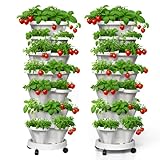 |
Maximum Capacity | Tiers/Levels: 7 tiers (per planter) | Material: Plastic | Indoor/Outdoor Use: Indoor and outdoor (patios, balconies, living rooms) | VIEW LATEST PRICE | Read Our Analysis |
More Details on Our Top Picks
-
GameXcel 5-Tier Vertical Planter Tower with Wheels
Perfect for small-space gardeners who need maximum mobility, the GameXcel tower rolls easily on lockable 360° casters. You’ll fit five stacked tiers into tight nooks—each painted polyethylene level uses patented soil-holding boards with airflow gaps to prevent root rot while retaining needed moisture. Bottom drainage holes stop overwatering, and the included saucer protects floors. At 13.6 x 29 x 13.6 inches and three pounds, it’s light and portable for indoor or outdoor use. You can plant strawberries, herbs, flowers, or veggies in compatible pots, and you’ll get warranty support plus a 30-day return option.
Our Take: Wheeled mobility changes the small-space gardening equation significantly. The ability to follow sun patterns across a patio, move plants under shelter before a storm, or reposition the garden at end of season is genuinely valuable. Vertical stacking means a small floor footprint still yields meaningful plant count — a practical combination of benefits for balconies and compact patios.
- Tiers/Levels:5 tiers
- Material:Polyethylene (PE) plastic
- Indoor/Outdoor Use:Indoor and outdoor
- Drainage / Water Management:Bottom drainage holes + soil-holding boards for moisture retention
- Mobility / Wheels:Included lockable 360° swivel casters (4)
- Plant Types / Use Cases:Strawberries, herbs, flowers, vegetables
- Additional Feature:Patented soil-holding boards
- Additional Feature:Lockable 360° casters
- Additional Feature:Saucer included
-
VIVOSUN 5-Tier Stackable Vertical Planter (Ivory)
If you’ve got limited room, this 5-tier VIVOSUN planter is a space-saver that fits balconies and kitchens. You’ll appreciate thick, high-quality polypropylene that won’t fade and resists summer cracking, so it’s reusable season after season. Stack tiers as 2, 3, or 4 to match your space, hang with chains, or mount on a cylindrical rod. The top-to-bottom flow design filters water efficiently, retaining moisture while conserving water; a bottom dish prevents ground staining. Use it for strawberries, herbs, flowers, or compact veggies to create a tidy, healthy vertical garden in tight indoor or outdoor spots.
Our Take: The small-space vertical format is the only way to grow meaningful plant density when floor area is genuinely constrained. Wheeled mobility adds repositioning flexibility that fixed tower planters don’t provide. Best for herbs, strawberries, and compact flowers that produce well in shallow soil volumes and benefit from regular repositioning toward sun.
- Tiers/Levels:Configurable (2–4 tiers commonly; listing emphasizes stackable tiers)
- Material:Polypropylene (PP) plastic
- Indoor/Outdoor Use:Indoor and outdoor (small spaces like kitchen, balcony)
- Drainage / Water Management:Top-to-bottom flow design; retains moisture; bottom dish included
- Mobility / Wheels:Can hang or mount; (wheels not specified)
- Plant Types / Use Cases:Strawberries, flowers, herbs, vegetables
- Additional Feature:Hangable with chains
- Additional Feature:Mountable on rod
- Additional Feature:Reusable without fading
-
Hourleey 5-Tier Stackable Strawberry & Herb Planter
Gardening beginners and small-space growers will love this compact tower for its versatile mounting options. You’ll get five 13 x 5.1-inch pods stacked into a 2.52 ft tower made from fade- and crack-resistant polypropylene, with a rust-proof iron chain for hanging. Top-down filtration and a bottom drip tray keep surfaces tidy while wheels and pole- or floor-mount compatibility let you move or suspend it easily. It’s lightweight (2.49 kg) yet sturdy enough for strawberries, herbs, succulents, and small veggies indoors or out. Hourleey includes a warranty and straightforward setup, making vertical gardening simple and efficient.
Our Take: Self-watering inserts in stackable planters solve the most common beginner failure: inconsistent watering that allows soil to dry between sessions. The vertical format suits balcony and patio gardeners specifically. Plant with herbs or compact strawberries that respond well to the individual pocket volumes typical of this design.
- Tiers/Levels:5 tiers
- Material:Polypropylene (PP) plastic
- Indoor/Outdoor Use:Indoor and outdoor compatible
- Drainage / Water Management:Top-down water filtration; bottom drip tray
- Mobility / Wheels:Wheels for portability (also can suspend)
- Plant Types / Use Cases:Strawberries, herbs, flowers, vegetables, succulents
- Additional Feature:Iron hanging chain
- Additional Feature:Lightweight packaging size
- Additional Feature:Wheels plus hang option
-
VECELO 5-Tier Self-Watering Vertical Garden Planter
Ideal for small-space growers, this 5-tier VECELO stack lets you plant more while its self-watering system reduces upkeep. You get five round, painted plastic pots that stack vertically on a compact 13.19 x 13.19 x 30.31-inch footprint, so you’ll fit herbs, strawberries, succulents, flowers or vegetables on a patio, balcony, or indoors. Built-in drainage channels and soil separators prevent waterlogging and help soil retain moisture, cutting watering frequency. Adjustable height, wheels for easy repositioning, and included tray, pipes, connector, hanging chain and fixing piece make setup versatile. Warranty available via customer service.
Our Take: Five tiers creates meaningful growing density in a compact floor footprint. The VECELO design is among the more structurally stable stackable formats — stability matters as the planters fill with soil weight. Best planted with a consistent species per tier (the same herb or the same trailing plant) rather than mixing species with different watering needs across tiers.
- Tiers/Levels:5 tiers
- Material:Plastic (painted)
- Indoor/Outdoor Use:Indoor and outdoor
- Drainage / Water Management:Self-watering/self-draining system; drainage channels; soil moisture retention
- Mobility / Wheels:Movable wheels included
- Plant Types / Use Cases:Strawberries, herbs, flowers, vegetables, succulents
- Additional Feature:Includes irrigation pipes
- Additional Feature:Soil separators included
- Additional Feature:Fixing metal piece
-
Vertical 5-Tier Stackable Strawberry and Herb Planter
Choose the Vertical 5-Tier Stackable Strawberry and Herb Planter when you want easy, senior-friendly gardening with minimal bending. You get a modular, height-adjustable tower (13.2 x 13.2 x 7.8 in) made from food-safe polypropylene with a painted brick-red finish and black riser. Five stackable levels hold strawberries, herbs, flowers, veggies or succulents while soil-holding boards and bottom drainage holes improve airflow and prevent overwatering. Four all-directional wheels and included mover make repositioning effortless. It ships with three tools, requires assembly, and weighs about 2.07 kg. Warranty support is available from Bociks (ASIN B0DZP4N246).
Our Take: Named for strawberries, this format works equally well for herbs, compact annuals, and edible flowers. The pocket design suits plants with shallow but broad root systems. Strawberries thrive in this format because runners can cascade down the tiers naturally. Position in full sun — strawberries and most herbs need 6+ hours of direct light to produce well.
- Tiers/Levels:5 tiers
- Material:Food-safe polypropylene plastic
- Indoor/Outdoor Use:Patio/deck (indoor/outdoor)
- Drainage / Water Management:Multiple bottom holes; soil-holding board retains water; prevents floor dirtying
- Mobility / Wheels:Four all-directional wheels included
- Plant Types / Use Cases:Strawberries, herbs, flowers, vegetables, succulents
- Additional Feature:Food-safe polypropylene
- Additional Feature:Includes planting tools
- Additional Feature:Height adjustable stack
-
4-Tier Stackable Vertical Strawberry Planter Tower
If you want big yields from a small space, this 4-tier tower delivers compact efficiency for urban gardeners. You’ll fit 28 plants into one square foot—perfect for strawberries, herbs, lettuce, or small veg—while reducing bending and improving access. The clover-shaped tiers let plants cascade, boosting airflow and sun exposure. Watering is simple: fill the top and it flows downward through the self-watering system, with built-in drainage and a 1-inch center hole for an optional support pipe or custom irrigation. Made in the USA from heavy-duty polished plastic, the desert sand tower stands floor-ready for indoor or outdoor use.
Our Take: Four-tier tower planters deliver the best yield-per-square-foot ratio in a portable container format. The larger tower accommodates more plants than compact stackable alternatives. For serious small-space food production, this is the right format. Plant with varieties bred for container production rather than garden varieties that need more soil volume than the pockets provide.
- Tiers/Levels:4 tiers
- Material:Thick durable plastic
- Indoor/Outdoor Use:Indoor and outdoor (patios, balconies, greenhouses)
- Drainage / Water Management:Efficient vertical watering; built-in drainage; self-watering capable
- Mobility / Wheels:Floor-standing (wheels not explicitly listed)
- Plant Types / Use Cases:Strawberries, herbs, lettuce, small vegetables
- Additional Feature:28 plants per sq.ft.
- Additional Feature:1″ center support hole
- Additional Feature:Made in USA
-
2-Pack 7-Tier Stackable Strawberry Planters with Wheels
Gardening enthusiasts with limited space will love this 2-pack 7-tier setup, offering maximum capacity in a compact footprint. You get two white vertical planters (14 pieces total) with seven tiers each, drainage grids, a removable saucer with four lockable wheels, and support poles. Each tier holds 0.11 cu ft soil; tiers stack to 38 inches high and support heavy loads. The layer-to-layer watering system sends water downward so you only water the top two tiers. Plastic construction is painted for durability and portability, and wheels make relocation simple—ideal for strawberries, herbs, flowers, or small vegetables.
Our Take: Two-pack value for vertical planters is a practical starting point — one tower for herbs, one for strawberries or edible flowers. The 2-pack enables basic species separation without sourcing multiple different products. A good way to test vertical growing before committing to a larger multi-tier investment.
- Tiers/Levels:7 tiers (per planter)
- Material:Plastic
- Indoor/Outdoor Use:Indoor and outdoor (patios, balconies, living rooms)
- Drainage / Water Management:Layer-to-layer watering; automatic drainage; drainage grids included
- Mobility / Wheels:Removable, lockable all-directional wheels included
- Plant Types / Use Cases:Strawberries, herbs, flowers, vegetables
- Additional Feature:Supports 150 lb per tier
- Additional Feature:Removable drainage grids
- Additional Feature:Two-pack bundle
Factors to Consider When Choosing Stackable Planters Ideas
Stackable planters vary significantly in structural stability at full soil weight, pocket depth, and drainage design. At 6BC, we evaluate stackable formats on whether each pocket drains properly into the next tier without waterlogging, and whether the assembled structure is stable when the center of gravity rises with multiple filled tiers.
Space And Footprint
While planning your stackable planter, measure the floor area and vertical clearance so the tower fits comfortably without blocking walkways or sunlight. You’ll choose tiers based on usable height: taller stacks save floor space but may need a wider base or stabilization to avoid tipping. Check base diameter and shape—narrow footprints free up room but cut load capacity and raise top-heaviness. If you want mobility, include extra floor space for casters and the turning radius when relocating the unit. Finally, factor in maintenance access: leave enough surrounding clearance to water, prune, and harvest every level without constantly repositioning the planter. Balancing height, base size, mobility, and access ensures efficient use of tight spaces.
Material Durability
Durability matters when you’re picking stackable planters, because material choices determine how well the unit stands up to weight, weather, and everyday use. Choose polyethylene (PE) or polypropylene (PP) plastics for resistance to cracking, fading, and moisture—they’re reliable indoors and out. Look for thicker walls and reinforced rims so tiers resist impacts and support heavier loads without warping. If you’ll use them outdoors, UV-resistant or painted finishes help prevent sun degradation and color loss. Check metal parts like chains or support poles; stainless or galvanized options resist rust in humid conditions. Finally, verify the load capacity per tier and total weight rating to ensure saturated soil, root growth, and handling won’t overstress the materials.
Watering And Drainage
When choosing stackable planters, prioritize systems that move water efficiently so roots stay healthy and you don’t overwater. Pick tiers with bottom drainage holes and inter-tier channels so excess moisture flows downward instead of pooling in upper pots. Choose models with soil-holding boards or wicking layers to keep a small, consistent reservoir; that reduces how often you water while avoiding saturation. Make sure each tier provides air gaps or uses breathable materials around roots to improve aeration and cut root-rot risk. Include a removable bottom saucer or catch tray to collect runoff and protect surfaces, and confirm it’s easy to empty or drain. Prefer top-to-bottom or layer-to-layer watering designs so water filters downward, conserving water and distributing moisture evenly.
Plant Compatibility
Good watering and drainage set the stage, but plant choice will determine how well a stackable planter performs. Pick shallow-rooted species—strawberries, herbs, succulents—that thrive in limited soil depth. Group plants by water needs: keep drought-tolerant types together and cluster moisture lovers so you won’t over- or under-water individual tiers. Think about mature spread and habit; choose compact or trailing varieties so tiers don’t block light or airflow. Manage weight by using lightweight mixes and placing smaller plants on upper levels to maintain stability. Finally, arrange by light: sun-loving plants belong on top tiers, while shade-tolerant species should occupy lower positions where they get less direct sun. This compatibility approach keeps your tower healthy and balanced.
Mobility And Portability
Want to move your garden around with ease? Check for lockable swivel casters or multi-directional wheels so you can roll and then secure the planter when it’s fully loaded. Consider both empty and loaded weight and match that to the wheel load capacity—heavier stacked towers need higher-capacity casters to move safely. Pick modular, lightweight materials and a stackable design that let you disassemble or lower the unit for transport and storage without tools. Decide if you need floor-standing with wheels or optional hanging/pole-mounting based on where you’ll move it. Finally, confirm caster type and material suit your floors—hardwood, tile, carpet, or decking—to avoid damage and ensure smooth rolling.
Assembly And Maintenance
If you’re buying a stackable planter, check the assembly steps and tools required up front so you won’t be frustrated mid-build—many systems snap together, but some need a screwdriver or hex key, central support rods, or screws. During assembly, inspect drainage and soil-retention parts—place boards, trays, or filters exactly as the instructions show to avoid pooling and root rot. Confirm weight capacity and follow stacking limits, lock or level each tier, and use caster locks or a fixed base to prevent tipping when loaded. Assemble with access in mind so you can reach inner plants for pruning, harvesting, and pest checks. Schedule seasonal disassembly or deep cleaning (quarterly): flush salts, sanitize plastics, and check for cracks, mold, or clogged channels.
Budget Versus Value
When weighing budget against value, focus on features that cut long-term costs—durable, UV-resistant materials, reliable drainage or self-watering systems, and included components like saucers or connectors will save you money and hassle over time. Set a clear spending limit but prioritize thick polypropylene or polyethylene and UV-stable finishes that resist cracking. Compare initial price to what’s bundled: wheels, saucers, soil separators, and connectors can eliminate extra buys and boost value per dollar. Factor in maintenance and utility savings—self-watering and soil-retention designs lower water use and replanting frequency, offsetting higher upfront costs. Lastly, choose modular, stackable systems that let you add or rearrange tiers so your planter adapts as your space and plant needs change.
Getting the Most From Vertical Stackable Planters
Vertical stackable planters reward deliberate plant selection and positioning. Here’s what makes them work.
Match plants to pocket depth. Stackable pockets are typically 4-6 inches deep. This suits strawberries, compact herbs (thyme, parsley, chives, basil), and annual flowers. Deep-rooted plants, tomatoes, and large vegetables need more soil volume than stackable pockets provide — choose accordingly.
Sun access across all tiers. In a tall stackable tower, lower tiers can fall into partial shade from upper tiers. Position the tower where sun comes from multiple angles, or rotate it regularly to ensure even light exposure. In partially shaded positions, plant shade-tolerant herbs (mint, parsley) in lower tiers and sun-needing plants at the top.
Watering technique. Water slowly from the top and allow time for moisture to percolate through tiers rather than running off the surface. Fast watering leaves lower tiers dry while upper tiers waterlog. Some designs include a central watering column — use it rather than surface watering.
Stability when full. Filled stackable planters become heavy. Position before filling, and on decks or balconies, distribute weight across multiple structural members rather than concentrating it on a single board.
For a broader look at vertical and space-efficient container formats, our container gardening guide covers the full decision framework across all planter types. For stackable growing specifically optimised for strawberry production, our guide to our guide to strawberry planters designed for pocket-format vertical growing useful.