

The decomposition speed advantage of tumbling composters comes from two mechanisms: aeration (oxygen availability for aerobic microbial respiration) and thermal mass maintenance (a closed container retains heat generated by microbial activity better than an open pile). Rotating the tumbler every 2–3 days introduces oxygen and redistributes material so that outer, cooler material moves toward the center where temperatures are highest. At 6BC Botanical Garden, well-managed tumblers with correct carbon-to-nitrogen ratios and regular rotation produced finished compost in 4–6 weeks during summer months — approximately three times faster than comparable material in unmanaged open piles.
At 6BC Botanical Garden, we use tumblers for processing kitchen scraps and softer yard waste quickly. One honest note before you choose: tumblers work best when you batch inputs rather than adding small amounts daily. If you collect scraps for a few days and add them in one go, a tumbler will significantly outperform a static pile. Here’s our take on the best options.
| Good Ideas EZCJR-BLK 7-Cubic-Foot Compost Wizard Jr. Black |  |
Compact & Beginner-Friendly | Capacity: 7 cubic feet | Drum/Chamber Type: Single-chamber tumbler | Rotating/Tumbling Mechanism: Tumbler with handles for rotation (12″ lid as handle) | VIEW LATEST PRICE | Read Our Analysis |
| VIVOSUN Dual Rotating 43-Gallon Outdoor Tumbling Composter |  |
Continuous Compost Supply | Capacity: 43 gallons | Drum/Chamber Type: Dual-chamber tumbler (twin chambers) | Rotating/Tumbling Mechanism: 360° tumbling rotating barrel | VIEW LATEST PRICE | Read Our Analysis |
| FCMP IM4000 Dual-Chamber Outdoor Compost Tumbler (37 gal) | 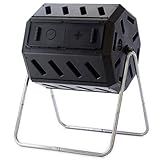 |
Eco-Friendly Recycled Build | Capacity: 37 gallons (5 cu ft) | Drum/Chamber Type: Dual-chamber tumbler | Rotating/Tumbling Mechanism: Rotating drum with handholds and fins | VIEW LATEST PRICE | Read Our Analysis |
| Miracle-Gro Dual Chamber Compost Tumbler 55.4 Gallon |  |
High-Capacity Performer | Capacity: 55.4 gallons (2 x 27.7 gal) | Drum/Chamber Type: Dual-chamber tumbler (hexagonal) | Rotating/Tumbling Mechanism: Easy-turn rotating tumbler | VIEW LATEST PRICE | Read Our Analysis |
| Maygrove 53-Gallon Dual-Chamber Compost Tumbler |  |
Heavy-Duty Reliability | Capacity: 53.01 gallons | Drum/Chamber Type: Dual-chamber tumbler | Rotating/Tumbling Mechanism: 360° rotating drum with mixing bars | VIEW LATEST PRICE | Read Our Analysis |
| Werph 43-Gallon Dual-Chamber Compost Tumbler with Gloves |  |
Quick-Setup Convenience | Capacity: 43 gallons | Drum/Chamber Type: Dual-chamber tumbler | Rotating/Tumbling Mechanism: 360° tumbling mechanism with deep fins | VIEW LATEST PRICE | Read Our Analysis |
| VEVOR 43-Gal Dual Chamber Compost Tumbler Bin |  |
Best Value Capacity | Capacity: 43 gallons (approx. 162.7 L) | Drum/Chamber Type: Dual-chamber tumbler | Rotating/Tumbling Mechanism: 360° rotation tumbling composter | VIEW LATEST PRICE | Read Our Analysis |
More Details on Our Top Picks
-
Good Ideas EZCJR-BLK 7-Cubic-Foot Compost Wizard Jr. Black
Compact & Beginner-Friendly
Our Take: The FCMP IM4000’s recycled-content construction reduces the carbon cost of acquiring the tool itself — relevant for composters who care about the full lifecycle of their equipment. The rotating barrel design works on the same tumbling principle as more expensive units: material tumbles and aerates with each rotation. A solid performance-to-cost ratio for households starting their first tumbler composting system.
If you live in a small space, this compact & beginner-friendly tumbler will make backyard composting easy. You’ll get a 7-cubic-foot Good Ideas EZCJR-BLK Compost Wizard Jr., a 22 x 23.5 x 30-inch, 27-pound unit that’s ready to use out of the box. Made in the USA from 98% post-industrial polyethylene, it’s FDA-approved for homes with kids and pets and is virtually animal-proof. Rotate the drum using handles or the 12-inch lid, place it in sun to boost heat, and tumble weekly to turn kitchen and yard waste into rich fertilizer—affordable, efficient, and aimed at small-space gardeners.
Our Take: The entry-level tumbler we’d recommend to gardeners starting out. At 7 cubic feet it’s right-sized for a small household, and the single-chamber design keeps it simple. One practical note: single-chamber tumblers require you to stop adding material while the batch finishes — plan to batch your inputs and then wait 4–8 weeks for a complete cycle before adding more.
- Capacity:7 cubic feet
- Drum/Chamber Type:Single-chamber tumbler
- Rotating/Tumbling Mechanism:Tumbler with handles for rotation (12″ lid as handle)
- Materials / Construction:98% post-industrial polyethylene (USA-made)
- Aeration / Mixing Features:Vent holes and turn wheels for aeration/mixing
- Intended Use / Target User:Urban and weekend gardeners, small yards; entry-level composting
- Additional Feature:Compact two-part unit
- Additional Feature:12-inch lid handle
- Additional Feature:Animal-proof design
-
VIVOSUN Dual Rotating 43-Gallon Outdoor Tumbling Composter
Ideal for busy gardeners, the VIVOSUN dual-chamber tumbler gives you a continuous compost supply without constant tending. You’ll appreciate the 43-gallon octagonal drum that spins 360° so you don’t have to dig or hand-mix; deep fins on eight panels break clumps and improve turning. Twin chambers let one side finish while you fill the other. Air vents and fin design promote oxygenation for faster fermentation. A premium metal frame, PP plastic body, and galvanized steel parts resist corrosion and weathering. It comes with waterproof garden gloves and four ABS digging/claw tools; warranty and return options are available.
Our Take: The dual-chamber design is where tumblers become genuinely practical for regular composting. One chamber finishes while the other fills — continuous output without the stop-start cycle of single-chamber units. At 43 gallons, the VIVOSUN handles most households well. Build quality on the rotation mechanism is solid, which matters because that’s the point of failure on cheaper tumblers.
- Capacity:43 gallons
- Drum/Chamber Type:Dual-chamber tumbler (twin chambers)
- Rotating/Tumbling Mechanism:360° tumbling rotating barrel
- Materials / Construction:PP plastic body + premium metal frame / galvanized steel components
- Aeration / Mixing Features:Air vents and deep fins on eight panels for aeration and clump breaking
- Intended Use / Target User:Outdoor gardeners seeking continuous composting for yard/kitchen waste
- Additional Feature:Twin chambers for continuity
- Additional Feature:Includes garden gloves
- Additional Feature:Comes with digging tool
-
FCMP IM4000 Dual-Chamber Outdoor Compost Tumbler (37 gal)
Choose the FCMP IM4000 when you want steady composting for a small garden—its eco-friendly recycled build keeps plastics out of landfills. You get a 37‑gallon octagonal tumbler made in Canada from 100% post‑consumer recycled, BPA‑free, UV‑inhibited polypropylene on a galvanized steel frame. Dual chambers let one side cure while you fill the other, and deep fins plus aeration holes speed breakdown. Wide openings, removable doors, and handholds make loading, turning, and unloading easy. Rotate 5–6 times every 2–3 days; in warm conditions you could have finished compost in about two weeks. One‑year limited warranty.
Our Take: A well-regarded option with a smaller footprint than the 43-gallon alternatives — right for tighter backyards or lighter composting volumes. The recycled plastic construction handles UV exposure well. FCMP has a good track record for producing compost relatively quickly; the smaller capacity means batches move through faster.
- Capacity:37 gallons (5 cu ft)
- Drum/Chamber Type:Dual-chamber tumbler
- Rotating/Tumbling Mechanism:Rotating drum with handholds and fins
- Materials / Construction:UV-inhibited polypropylene (100% post-consumer recycled) + galvanized steel frame
- Aeration / Mixing Features:Aeration holes and deep fins for oxygen flow and clump breaking
- Intended Use / Target User:Gardeners wanting continuous dual-chamber composting for yard and kitchen waste
- Additional Feature:Made from recycled resin
- Additional Feature:BPA-free UV-inhibited shell
- Additional Feature:1-year limited warranty
-
Miracle-Gro Dual Chamber Compost Tumbler 55.4 Gallon
Looking for a heavy-duty tumbler that handles lots of material? You’ll appreciate the Miracle-Gro Dual Chamber Compost Tumbler’s 55.4-gallon capacity (two 27.7-gallon chambers) and hexagonal, easy-turn design that lets you add fresh waste to one side while compost cures in the other. It produces usable compost in about 4–6 weeks with a few rotations every few days, cutting manual turning. Built from BPA-free, UV-protected plastic with galvanized and alloy steel parts, it’s pest-resistant and made for year-round use. Measuring 37.4″ x 23.5″ x 29.5″ and weighing 10 kg, it’s a sturdy, high-volume option.
Our Take: If you generate more material than the standard 43-gallon tumblers can handle, the Miracle-Gro’s 55.4-gallon capacity provides meaningful additional room. Solid construction, reliable dual-chamber design, and the brand’s commitment to quality shows in the build. Worth the additional cost if you’re consistently filling smaller tumblers.
- Capacity:55.4 gallons (2 x 27.7 gal)
- Drum/Chamber Type:Dual-chamber tumbler (hexagonal)
- Rotating/Tumbling Mechanism:Easy-turn rotating tumbler
- Materials / Construction:BPA-free, food-grade, UV-protected plastic + galvanized/alloy steel base
- Aeration / Mixing Features:Designed vents and internal mixing for efficient curing (rotate few times)
- Intended Use / Target User:High-volume garden composting for plants, flowers, harvest improvement
- Additional Feature:Fast 4–6 week cycle
- Additional Feature:Tight pest-resistant seals
- Additional Feature:All-season durability
-
Maygrove 53-Gallon Dual-Chamber Compost Tumbler
If you compost regularly for a family or small community garden, this dual-chamber tumbler delivers heavy-duty reliability. You get a 53.01‑gallon cylindrical drum made from UV‑resistant polypropylene on a solid steel frame, plus a pair of gloves. Rotate the drum 360° with gear‑assist and built‑in mixing bars to blend materials without manual digging; use adjustable vents and dual‑direction brake locks to manage airflow, moisture, and stability. Large sliding doors make loading and harvesting easy. It assembles in minutes with snap‑together parts, resists weathering and sagging, and can produce finished compost in about 4–6 weeks.
Our Take: A capable option at mid-size capacity — splitting the difference between the 43- and 55-gallon alternatives. The 53-gallon dual-chamber handles family-sized input volumes and community garden-scale output. Build quality is good. A practical choice if you want more capacity than the VIVOSUN without stepping up to the Miracle-Gro’s price.
- Capacity:53.01 gallons
- Drum/Chamber Type:Dual-chamber tumbler
- Rotating/Tumbling Mechanism:360° rotating drum with mixing bars
- Materials / Construction:UV-resistant polypropylene drum + heavy-duty steel frame
- Aeration / Mixing Features:Adjustable air vents and built-in mixing bars for airflow and mixing
- Intended Use / Target User:Beginners and experienced gardeners for effortless everyday composting
- Additional Feature:Gear-assist ergonomic handle
- Additional Feature:Adjustable air vents
- Additional Feature:Snap-together quick assembly
-
Werph 43-Gallon Dual-Chamber Compost Tumbler with Gloves
Perfect for gardeners who want fast, hands-off composting, the Werph 43-Gallon Dual-Chamber Tumbler delivers quick-setup convenience and easy rotation. You’ll get a hexagonal, 43-gallon plastic bin with dual chambers so you can load one side while the other cures, speeding composting to about 4–6 weeks. The 360-degree tumbling action and deep fins mix materials evenly; a sliding door adds simple access. It ships mostly preassembled and needs 34 screws, cutting setup to roughly 10 minutes. Made from BPA-free, weather-resistant materials, it’s lightweight (18 lbs), includes gloves, and comes with manufacturer support and return options.
Our Take: Comparable performance to the VIVOSUN at similar capacity. The included gloves are a practical rather than gimmicky addition. If the Werph is priced lower at the time of purchase, it’s a legitimate alternative — the build quality holds up for regular use.
- Capacity:43 gallons
- Drum/Chamber Type:Dual-chamber tumbler
- Rotating/Tumbling Mechanism:360° tumbling mechanism with deep fins
- Materials / Construction:BPA-free plastic construction
- Aeration / Mixing Features:Deep fins for even mixing and aeration
- Intended Use / Target User:Gardeners processing kitchen scraps and yard waste for fast composting
- Additional Feature:Requires 34 screws
- Additional Feature:Sliding door panel
- Additional Feature:Most parts pre-assembled
-
VEVOR 43-Gal Dual Chamber Compost Tumbler Bin
Tackle large garden waste with the VEVOR 43‑Gal dual chamber tumbler, offering standout value capacity for families who compost regularly. You’ll get a 43-gallon octagonal bin made from UV-resistant, BPA-free polypropylene with Q235B steel parts, weighing about 21.9 lbs and holding up to 110 lbs. Dual chambers let you compost in one side while adding scraps to the other; 360° tumbling and internal grooves speed decomposition to about 4–6 weeks with routine turning. Vents promote airflow, and detachable sliding doors seal tight against pests. The package includes assembly hardware, gloves, a screwdriver, and clear instructions for quick setup.
Our Take: Solid heavy-duty construction — the VEVOR tends to have sturdier framing than many competitors at this price point, which matters for outdoor year-round use. At 43 gallons with a dual-chamber design it performs well. If durability in harsh weather is your priority, the VEVOR’s heavier build is worth considering over lighter alternatives.
- Capacity:43 gallons (approx. 162.7 L)
- Drum/Chamber Type:Dual-chamber tumbler
- Rotating/Tumbling Mechanism:360° rotation tumbling composter
- Materials / Construction:PP body + Q235B steel components
- Aeration / Mixing Features:Strategically placed vents and internal grooves for circulation and clump breaking
- Intended Use / Target User:Large families and avid gardeners for outdoor/kitchen garden composting
- Additional Feature:110 lb max load
- Additional Feature:Includes assembly hardware
- Additional Feature:Supplied Phillips screwdriver
Factors to Consider When Choosing Rotating Compost Bin Ideas
Choosing a tumbler involves trade-offs between capacity, continuous use, and footprint. At 6BC, the factors that matter most are chamber design (single vs. dual), capacity relative to your actual output, and rotation mechanism durability — because that’s what fails first on cheap tumblers.
Capacity And Space
Because your compost needs and space vary through the year, choose a rotating bin size that fits both your waste stream and the spot where it will live. Match capacity to household output: small homes and urban gardeners often do fine with about 5–7 cubic feet (≈37–50 liters), while larger families or avid gardeners usually need 40+ gallons (150+ liters) to avoid constant emptying. Measure the footprint and height of the intended location so the tumbler turns freely and you can reach access doors. Balance size with manageability—very large drums can be hard to rotate when full. Consider throughput: dual-chamber units or multiple smaller bins let you add fresh material while another batch cures, and extra capacity helps during peak seasonal cleanups.
Material Durability
If you want a tumbler that lasts, prioritize durable materials and corrosion-resistant hardware so the unit keeps turning season after season. Choose rotatable drums made from UV-resistant plastics or polypropylene to resist sun degradation and cracking. Inspect frames and axles: galvanized or powder-coated steel will prevent rust and maintain structural integrity during wet conditions and frequent tumbling. Assess shell thickness and reinforcement—ribs or fins reduce warping and handle impacts and heavy loads better. Prefer BPA-free, food-safe plastics when composting kitchen scraps to avoid chemical leaching, and make sure fasteners and seals are corrosion-resistant for long-term hygiene. Finally, check the stated load capacity (many larger units handle 100+ lbs) so supports won’t sag or fail.
Chamber Configuration
Regarding chamber configuration, pick the layout that matches how much compost you produce and how continuously you want it. If you’re a smaller household or compost intermittently, a single-chamber tumbler’s simple, cheaper design will work—you’ll pause filling while a batch finishes. Choose a dual-chamber if you want continuous output: one side cures while you fill the other, giving steady finished compost. For large gardens or high waste volumes, multi-chamber systems boost throughput and cut wait times. Pay attention to chamber volume and shape—wider, octagonal, or finned compartments tumble and aerate better, breaking clumps for faster decomposition. Also check access and internal mixing features: large removable doors and integrated fins or baffles make loading, unloading, and internal mixing far easier.
Ease Of Rotation
Once you’ve chosen a chamber layout, think about how easy it will be to spin when it’s full—rotation affects how often you’ll actually turn the pile and how much effort you’ll need. Look for tumbling mechanisms with ample leverage: long handles or large-diameter lids cut the force required and help users of all strengths. Evaluate drum balance and bearing quality—well-balanced barrels with ball or sleeve bearings and sturdy axle mounts stay easier to spin as material compacts. Match drum capacity to your batch size; larger, fuller drums increase resistance and may need gear-assist or ergonomic cranks. Check manufacturer turning-frequency guidance, since weekly-tumble designs tolerate heavier loads than systems meant for multiple daily turns. Note internal mixing fins or paddles: they break clumps but can raise baseline resistance slightly.
Aeration And Vents
Because oxygen is what keeps composting aerobic and fast, pay close attention to vent placement and design when picking a rotating bin. You’ll want multiple openings distributed around the drum, not a single vent, so airflow reaches all zones. Balance vent size and number: small holes (a few millimeters) help retain moisture, while larger or more vents boost oxygen but may demand tighter moisture control. Look for internal fins or baffles that break up clumps and create air channels; they improve penetration during tumbling and cut down anaerobic pockets. Consider elevated or slotted mounts for passive underflow, and rely on regular tumbling to actively mix air in. Monitor temperature and odors—steady warmth and no foul smells mean aeration’s working.
Pest Resistance Features
Often overlooked, pest resistance is a crucial factor when choosing a rotating compost bin because it keeps critters out and prevents odors that attract them. You should pick bins with tightly sealed, lockable access doors and snug lids to block rodents and reduce scent escape. Favor smooth, non‑porous UV‑resistant polypropylene or polyethylene shells without external gaps so insects have nowhere to hide and you can sanitize surfaces easily. Choose designs with elevated or well‑supported bases to limit crawling pests and soil contact. Look for small, screened vents that provide airflow for aerobic breakdown but bar flies and tiny insects. Also consider internal baffles or sliding doors that let you seal food scraps and a model you can turn often to avoid anaerobic pockets and smells.
Assembly And Maintenance
When choosing a rotating compost bin, check how much assembly time and mechanical upkeep you’ll need—snap-fit panels and a few screws are quick, but models with dozens of fasteners or complex axles add setup errors and future frustration. You should verify drum and frame materials are corrosion- and UV-resistant and whether axles, bearings, and handles arrive pre-lubricated or need periodic greasing. Prefer drums with removable access doors, large openings, or hinged panels to make emptying, adding ingredients, and inspections fast and sanitary. Inspect vent placement and seals so clearing vents and tightening seals is straightforward, reducing pests, excess moisture, and odors. Finally, plan realistic routines—rotation frequency, tightening fasteners, cleaning fins, and winter storage—and pick a model that fits your time and skills.
Heat Retention Design
If you want a tumbler that heats up and holds temperature, focus on dark, insulated or double-walled drums, good sealing, and sufficient internal mass—these combine to absorb solar gain and cut conductive and convective losses so the core stays in the thermophilic range longer. Choose dark or insulated shells and place the drum in full sun on a gravel or wooden base to limit ground heat loss. Match volume to your needs: small 5–10 cu ft units warm quickly but cool fast; larger drums retain heat once established. Seal joints and limit large vents to reduce drafts while keeping enough aeration for microbes. Balance is key—enough oxygen for activity without excessive cooling from wind or oversized openings.
Getting the Most From a Tumbling Composter
Tumblers are faster than static bins, but only if you manage them correctly.
Batch your inputs. Add material in larger quantities every few days rather than a handful at a time daily. A full tumbler reaches higher internal temperatures and breaks down faster than a half-full one that’s constantly being disturbed.
Balance greens and browns every time you add material. For every bucket of kitchen scraps (nitrogen), add a similar volume of dry carbon material — torn cardboard, dried leaves, wood chips. This prevents the wet, sludgy pile that’s a common tumbler complaint and speeds decomposition significantly.
Spin it every 2–3 days. This is the main maintenance task — and it takes about thirty seconds. Consistent rotation keeps the pile aerated and speeds breakdown. In warm months, a well-managed tumbler can produce finished compost in as little as 3–4 weeks.
Dual-chamber management: when one chamber is full and finishing, lock it out of the rotation cycle (or mark it) and use the other chamber exclusively for new inputs. Don’t mix finished and active material — it slows the finished batch down and introduces undecomposed material to your compost.
How Often to Rotate and What to Add for Fastest Results
Rotation frequency and carbon-nitrogen balance are the two controllable variables in tumbler composting. Rotate every 2–3 days during warm weather for active composting; weekly is sufficient as temperatures drop below 60°F. The carbon-nitrogen target is approximately 3:1 by volume — for every 3 volumes of carbon-rich brown material (dry leaves, cardboard, paper), add 1 volume of nitrogen-rich green material (food scraps, fresh plant trimmings, grass clippings). A batch that smells like ammonia has too much nitrogen — add brown material. A batch that’s dry and inactive has too much carbon — add green material and water. The adjustment takes less than five minutes per correction.
For outdoor composting in static rather than tumbling format — including open bins and large-capacity expandable systems — our guide to backyard compost bins covers the volume selection and placement decisions for stationary outdoor composting.
For the full decision framework across all tools and formats in this category, see our composting guide.