

Raised bed construction material is the first selection decision because it determines maintenance demands, longevity, and suitability for food growing. Galvanized steel outlasts untreated wood by a decade or more, resists soil moisture and freeze-thaw cycles, and contains no wood preservatives that could leach into edible root zones. At 6BC Botanical Garden, raised beds for food production and specialty display plantings taught us that the practical durability difference between a well-built metal bed and a wood alternative compounds over years of seasonal use — metal beds requiring no structural maintenance after three years while wood alternatives needed board replacement in year two.
| Land Guard Galvanized Oval Raised Garden Bed Kit | 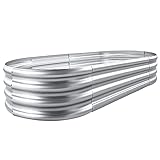 |
Quick-Assembly Pick | Material: Galvanized metal (Q195 sheet) | Shape: Oval | Intended Use: Outdoor vegetable planter/raised bed | VIEW LATEST PRICE | Read Our Analysis |
| Galvanized Raised Garden Bed 4x2x1ft (2-Pack) |  |
Two-Pack Value | Material: Galvanized metal (1 mm steel) | Shape: Oval | Intended Use: Outdoor planter for vegetables/herbs/flowers | VIEW LATEST PRICE | Read Our Analysis |
| Best Choice Raised Garden Bed 72x24x30in |  |
Ergonomic High-Rise | Material: Wood (Chinese fir) | Shape: Rectangular | Intended Use: Flowers, succulents, vegetables; balcony/deck use | VIEW LATEST PRICE | Read Our Analysis |
| Rakukiri Galvanized Raised Oval Garden Bed Planter |  |
Large-Capacity Option | Material: Galvanized metal (0.8 mm sheet) | Shape: Oval | Intended Use: Outdoor planter for vegetables/flowers/herbs | VIEW LATEST PRICE | Read Our Analysis |
| Quictent Raised Garden Bed with Cover Mini Greenhouse |  |
Greenhouse Combo | Material: Galvanized metal (extra-thick) | Shape: Rectangular | Intended Use: Vegetables, herbs, flowers (raised bed + mini greenhouse) | VIEW LATEST PRICE | Read Our Analysis |
| Foxlang Galvanized Raised Garden Bed 8x4x1ft (2) |  |
Heavy-Duty Duo | Material: Galvanized metal sheets | Shape: Rectangular | Intended Use: Outdoor planter for vegetables/flowers/herbs | VIEW LATEST PRICE | Read Our Analysis |
| U-Shape Metal Cucumber Trellis Garden Arch (Green) |  |
Space-Saving Support | Material: Metal core with plastic coating (stainless steel core + plastic) | Shape: U-shape / semicircular arch (trellis) | Intended Use: Support/trellis for climbing vegetables and vines (for raised beds) | VIEW LATEST PRICE | Read Our Analysis |
More Details on Our Top Picks
-
Land Guard Galvanized Oval Raised Garden Bed Kit
If you want a low-maintenance, heavy-duty planter that’s a quick-assembly pick, this galvanized oval bed works well. You’ll get a 48×24×12-inch oval box made from Q195 galvanized steel with double-layer anti-corrosion finishing, 0.78–1.56 mm thickness, and an oval interface that resists pressure and reduces deformation. It holds about 7.14 cu ft, weighs 5 lb, and assembles in roughly five minutes with the included tool set. The open base prevents water buildup and root rot, promoting nutrient uptake for vegetables. It’s floor-standing, reusable, silver, and backed by manufacturer warranty details and a retailer return policy.
Our Take: The Q195 galvanized steel specification is relevant for raised bed longevity — Q195 is a low-carbon steel grade that galvanizes well and holds its zinc coating through repeated wet-dry cycles and soil contact. At 12-inch depth, this bed suits the majority of annual vegetable production: most vegetables need 8–10 inches of quality growing medium. The oval shape reduces foot-traffic pressure at the corners where square beds tend to compact soil along the inside edge.
- Material:Galvanized metal (Q195 sheet)
- Shape:Oval
- Intended Use:Outdoor vegetable planter/raised bed
- Open/Drainage Design:Open base (no bottom) for drainage
- Assembly Required:Yes — easy, ~5 minutes
- Outdoor Compatibility / Weather Resistance:Designed for outdoor use; double-layer galvanizing (anti-corrosion)
- Additional Feature:Double-layer galvanizing
- Additional Feature:Oval interface design
- Additional Feature:~5 minute assembly
-
Galvanized Raised Garden Bed 4x2x1ft (2-Pack)
Perfect for gardeners who want durable, space-efficient beds, this galvanized planter comes as a convenient two-pack. You get two silver, oval 4x2x1ft beds made from 1 mm galvanized steel with a smooth-edge, rust- and weather-resistant finish. At 17.2 pounds total, each open-bottom bed holds about 8 cubic feet, lets roots access native soil, and provides natural drainage—no liner needed. The 1 ft depth suits deeper vegetables; the narrow 2 ft width lets you reach plants easily. Assembly’s straightforward with clear instructions, and Tegarbed offers warranty support if you run into issues.
Our Take: A two-pack at 1mm galvanized steel allows site testing before committing to permanent bed placement — the units can be repositioned as you learn which areas receive the most useful sun, drainage, and access. At 1-foot depth, the 4×2 surface suits the standard width that allows reaching the center without stepping in from either side. Two beds give the minimum critical mass for crop rotation — one bed for nightshades, one for brassicas — without cross-family repetition between seasons.
- Material:Galvanized metal (1 mm steel)
- Shape:Oval
- Intended Use:Outdoor planter for vegetables/herbs/flowers
- Open/Drainage Design:Open-bottom design (no liner required)
- Assembly Required:Yes — easy assembly with parts list
- Outdoor Compatibility / Weather Resistance:Rust resistant, weather resistant galvanized finish
- Additional Feature:2-pack value
- Additional Feature:1 mm thick steel
- Additional Feature:Smooth-edge finish
-
Best Choice Raised Garden Bed 72x24x30in
Choose this bed when you want easy access for planting and maintenance — it’s an ergonomic high-rise at 30 inches. You’ll get a 72 x 24 x 30 in profile with 8.4 cu ft planting volume and a 300 lb weight capacity, ideal for balconies, decks, or patios. Built from Chinese fir, it resists warping and sagging for season-long durability. Six drainage holes promote root aeration and prevent root rot and mineral buildup. The elevated design deters pets and rodents, and suits flowers, succulents, vegetables, or mixed plantings. It’s straightforward, sturdy, and space-efficient for accessible gardening.
Our Take: At 30 inches, this bed eliminates all ground-level access — the working height is comparable to a potting bench, which keeps the lumbar spine in a neutral position during planting, maintenance, and harvest. The 8.4 cubic foot planting volume at 30-inch depth supports the root systems of deeper-rooted crops (beans, tomatoes, eggplant) that need room to develop downward without obstruction. At 300 lb capacity, the structure handles the weight of full soil load plus irrigation water without frame deformation over time.
- Material:Wood (Chinese fir)
- Shape:Rectangular
- Intended Use:Flowers, succulents, vegetables; balcony/deck use
- Open/Drainage Design:Drainage holes (six holes)
- Assembly Required:Yes — assembly of wooden bed (standard)
- Outdoor Compatibility / Weather Resistance:Weather-friendly wood (Chinese fir), resists warping
- Additional Feature:30 in ergonomic height
- Additional Feature:Chinese fir construction
- Additional Feature:Six drainage holes
-
Rakukiri Galvanized Raised Oval Garden Bed Planter
For gardeners needing a durable, large-capacity option, the Rakukiri galvanized oval bed delivers space and longevity. You’ll get a minimal silver oval planter measuring 60 × 29 × 11 inches that holds about 68 gallons of soil yet weighs just 5 pounds. Made from 0.8 mm double-layer galvanized metal with powder coating and recycled material, it’s rot-, rust-, and weather-resistant. The open-bottom design prevents waterlogging and improves root nutrient uptake. It’s GRS certified, outdoor-rated, easy to assemble with included tools and manual, and backed by a 30-day return and one-year warranty for peace of mind.
Our Take: At 11 inches in depth, this bed suits shallow to moderate root crops — salad greens, herbs, strawberries, and compact root vegetables like bush beans and determinate tomatoes all perform well in this depth range. The oval 60×29 footprint provides a useful surface-to-perimeter ratio: more interior planting area per linear foot of perimeter means more efficient use of the soil volume. Longevity-oriented galvanized construction reduces the maintenance that painted metal or untreated wood require.
- Material:Galvanized metal (0.8 mm sheet)
- Shape:Oval
- Intended Use:Outdoor planter for vegetables/flowers/herbs
- Open/Drainage Design:Open-bottom design (prevents water accumulation)
- Assembly Required:Yes — easy assembly; hardware + manual included
- Outdoor Compatibility / Weather Resistance:Rot-resistant, rust-resistant, weather-resistant galvanized metal (powder coated)
- Additional Feature:GRS certified material
- Additional Feature:Powder-coated finish
- Additional Feature:68-gallon soil capacity
-
Quictent Raised Garden Bed with Cover Mini Greenhouse
If you want season‑extending protection, this galvanized 3‑in‑1 greenhouse combo gives you a sturdy, compact solution. You get a 6 x 3 x 1 ft raised bed holding about 18 cu ft of soil plus a dismountable mini greenhouse that zips on for frost protection. Two zippered screen windows provide ventilation and bird protection while you control temperature. Extra‑thick galvanized steel, stronger middle poles and a supporting bar resist bending and connection failure. Kit includes cover, frame connectors, supporting bars, two middle poles, 20 plant tags and gloves. Frame connectors have lifetime replacement; bed and cover have warranty support.
Our Take: The greenhouse frame that converts a standard 6×3 bed into a season-extended growing space solves a specific problem: starting warm-season crops outdoors 3-4 weeks earlier than unprotected soil permits, without needing a separate greenhouse structure. The 18 cubic feet of soil volume supports a productive plant count for the footprint. The dismountable design allows using the bed with or without the frame as seasonal needs change — full sun in summer, protected in spring and fall.
- Material:Galvanized metal (extra-thick)
- Shape:Rectangular
- Intended Use:Vegetables, herbs, flowers (raised bed + mini greenhouse)
- Open/Drainage Design:Raised bed with implied drainage (open-style design; greenhouse cover vents)
- Assembly Required:Yes — includes frame connectors and assembly (greenhouse assembly required)
- Outdoor Compatibility / Weather Resistance:Weather resistant galvanized metal; greenhouse cover for protection
- Additional Feature:Included greenhouse cover
- Additional Feature:Lifetime connector replacement
- Additional Feature:5-year bed support
-
Foxlang Galvanized Raised Garden Bed 8x4x1ft (2)
Tackle large vegetable beds with this heavy-duty duo that gives you two 8x4x1 ft galvanized planters. You’ll get two gray rectangular beds made from thickened galvanized metal sheets with heavy-duty middle rods for rigidity. Each 96 x 48 x 12-inch box offers 12-inch depth for deep-rooted vegetables, an open base for drainage and root protection, plus rust resistance for longevity. The set includes screws, tools, manual, four plastic corner caps, and gloves; assembly takes minutes using upgraded screws. Floor-standing mounting makes them movable. Foxlang backs the pair with a 3-year warranty, model ASIN B0G3ZR7R31.
Our Take: Two 8×4 beds give 64 square feet of growing surface — enough to run a structured crop rotation across four planting families (nightshades, brassicas, legumes, and roots) with 16 sq ft per family each season. The thickened galvanized metal specification on 8-foot frames is important because longer beds experience more lateral pressure from soil expansion after irrigation, which can bow thinner-gauge metal sides outward over time. Heavy-duty construction maintains rectangular geometry through seasonal soil volume changes.
- Material:Galvanized metal sheets
- Shape:Rectangular
- Intended Use:Outdoor planter for vegetables/flowers/herbs
- Open/Drainage Design:Open base design with drainage hole(s)
- Assembly Required:Yes — includes screws, manual; few minutes setup
- Outdoor Compatibility / Weather Resistance:Rust resistant galvanized metal; floor-standing for outdoor use
- Additional Feature:Heavy-duty middle rods
- Additional Feature:Includes gloves/tools
- Additional Feature:3-year warranty
-
U-Shape Metal Cucumber Trellis Garden Arch (Green)
Gardeners with small beds will love this U-shape arch; it gives space-saving support for vining crops like cucumbers. You’ll install the 47.2 x 30 x 47.2-inch green trellis across a raised bed to grow on both sides, thanks to its outward-expanding semicircular design. The stainless steel core with plastic coating resists rust and cuts heat transfer to roots. You’ll appreciate upgraded cross-shaped connectors for tool-free assembly, plus included netting, 20 garden clips, 100 leaf ties and a twist tie. It’s lightweight (4.4 lb), adjustable in length and height, and suits cucumbers, peas, beans, tomatoes and flowers.
Our Take: A trellis added over a raised bed verticalizes the bed’s productive area — trained cucumbers, climbing beans, and vining squash produce just as much per plant in 1 sq ft of bed as they do sprawled across 4–6 sq ft, but the trellis redirects that production upward. The 47.2-inch height gives adequate vertical growing space for indeterminate cucumbers and pole beans through a full season. The U-shape design spans the full width of a standard 2-foot-wide bed, allowing planting on both sides with plants trained inward to the arch.
- Material:Metal core with plastic coating (stainless steel core + plastic)
- Shape:U-shape / semicircular arch (trellis)
- Intended Use:Support/trellis for climbing vegetables and vines (for raised beds)
- Open/Drainage Design:N/A for bed — trellis allows airflow/drainage around plants (not a soil container)
- Assembly Required:Yes — required assembly; connectors provided
- Outdoor Compatibility / Weather Resistance:Plastic-coated stainless steel to resist rust and outdoor exposure
- Additional Feature:Plastic-coated stainless core
- Additional Feature:Adjustable dimensions
- Additional Feature:Comes with clips/netting
Factors to Consider When Choosing Raised Garden Bed Ideas
When you’re planning a raised bed, think about the size and footprint to make sure it fits your space and access needs. Match soil depth to the plants you want, pick durable materials, and plan for proper drainage and a stable base. Also choose a design that’s easy to assemble so you won’t get stuck on installation.
Size And Footprint
Although bed size often starts with available space, you should pick depth, width, and overall footprint based on plant roots, how you’ll reach the soil, and where the bed will sit. Match depth to crops: shallow herbs and lettuce do fine in 6–8 inches, most vegetables want about 12 inches, and deep-rooted crops need 18+ inches. Keep width to 3–4 feet so you can reach the center from either side without stepping in and compacting soil. Small 4×2 ft beds give easy access; longer 6–8 ft beds increase planting area but need paths. Consider overall height—24–30 inches reduces bending and boosts soil volume for intensive planting. Leave 18–24 inches clearance around beds for maintenance and drainage.
Soil Depth Needs
Because different plants need different root space, you should match bed depth to the crops you plan to grow rather than defaulting to a single height. Most shallow-rooted herbs and salad greens do fine in 6–8 inches of soil, so plan at least 6 inches for microgreens, lettuce, and chives. Root vegetables like carrots, parsnips, and beets need 12–18 inches of loose, deep soil to avoid stunting. Small fruiting plants and larger vegetables—tomatoes, peppers, eggplants—benefit from 12–24 inches to support root mass and retain moisture. Perennials, small fruit bushes, and plants with extensive roots typically want 18–24+ inches to prevent crowding and nutrient depletion. If your bed uses native soil beneath an open bottom, ensure the specified root-zone depth of loose, well-draining medium rather than just total height.
Material Durability
If you want your raised bed to last, pick materials that resist moisture, pests, and physical stress—galvanized or powder-coated metals, thick-gauge panels, rot-resistant woods like cedar, or quality composites will hold up far better than thin metal, untreated lumber, or flimsy plastics. Choose metals with proven corrosion resistance—zinc galvanizing or layered powder coats—to slow rust. Use thicker panels or heavy timber to resist denting and soil pressure; thin gauges deform quickly. Prefer rot- and insect-resistant woods or composites for natural looks with multi-year durability and less upkeep. Factor in maintenance needs and manufacturer warranties: longer guarantees and low-maintenance finishes usually signal greater longevity. Finally, avoid designs that trap standing water, since constant moisture accelerates material breakdown.
Drainage And Base
When you pick a raised bed, make drainage and the base a priority so roots get oxygen and excess water can escape—choose open-bottom frames or removable liners, set beds on level ground (or add gravel and drainage holes on hard surfaces), and aim for at least 12 inches of well-draining soil mix—about 60% topsoil/compost to 40% coarse material—while avoiding overuse of rubble that cuts into the effective root zone. You’ll want beds that sit evenly; uneven bases channel water and stress plants. On concrete or patios, add a gravel layer or create drainage holes and consider slotted or slightly elevated bottoms to prevent standing water. In heavy-rain areas, include overflow or shallow side drains. Use coarse material sparingly so roots have depth to grow.
Ease Of Assembly
Although some raised beds promise quick setup, check the estimated assembly time and required tools so you’re not surprised, and favor kits that list minutes rather than hours. You’ll want designs with simple hardware and few parts—kits needing only a screwdriver or that include tools often go together in under 10 minutes. Clear, illustrated instructions and included fasteners save trips to the hardware store and reduce frustration. Consider panel weight and stiffness: thin, lightweight sheets snap together fast but may need reinforcement, while thicker panels with fewer joints take more effort yet give a sturdier bed. Finally, prefer pre-drilled holes, snap-fit joints, or modular corner connectors to cut alignment issues and assembly steps, especially if you’re working solo.
Planting Purpose
Planning your planting purpose helps you pick a raised bed that actually fits your crops and workflow. Decide what you’ll grow—shallow herbs and lettuce need 6–8 in, most vegetables want at least 12 in, and carrots or potatoes need deeper beds. Match bed width to access: 2–4 ft lets you reach the center; wider beds increase capacity but need paths or stepping stones. Design modular beds or enough soil volume for crop rotation and succession planting so you can swap sections without rebuilding. Size beds to respect companion planting and spacing—tomatoes 18–36 in, bush beans 3–4 in, lettuce 6–12 in—for airflow and disease control. Finally, allow room for covers, cold frames, or trellises for season extension and vining crops.
Building Your Soil for Raised Bed Success
The soil that fills a raised bed determines its productivity more than the bed material itself. A standard raised bed mix combines topsoil (40%), compost (40%), and a drainage component such as coarse perlite or aged bark (20%). Avoid garden soil directly from the ground — compaction and drainage problems in raised beds almost always originate from bringing native soil in rather than building a purpose-made mix. For beds used for food production, compost quality matters: finished compost with no recognizable remaining material contributes slowly available nutrients; unfinished compost can lock up nitrogen in the short term. Refresh the compost layer annually by top-dressing with 2 inches of finished compost at the start of each growing season.
For a look at the full range of modular and depth-focused raised bed options, our guide to Vego garden beds covers the beds designed around soil depth matching for different crop types. For the broader planting-in-containers framework, our container gardening guide covers soil, drainage, and watering decisions that apply across all contained growing formats.
For the full decision framework across all tools and formats in this category, see our raised garden beds guide.