

The kitchen collection bin and the outdoor composting system are two separate stages in a single pipeline — and they need to be matched to each other. A 1.3-gallon kitchen bin collects roughly 3–5 pounds of scraps per week for a 2-person household; a 43-gallon tumbler processes that volume efficiently. Mismatch the stages — undersized collection for a large family, or an 80-gallon outdoor bin for a single-person apartment — and either the kitchen bin fills too fast or the outdoor bin never builds enough critical mass to decompose effectively. At 6BC Botanical Garden, the composting pipeline functions as a whole system, not isolated components.
Outdoor tumblers are true composters: they break organic material down into usable compost through microbial activity over weeks to months. Electric countertop composters (like the Lomi and similar units) are food waste processors — they grind and dehydrate scraps into a soil amendment, but the output still benefits from being mixed into a traditional compost pile or garden bed before planting.
At 6BC Botanical Garden, we work with both. Here’s our honest take on when each type makes sense and which specific models are worth the investment.
| Good Ideas Compost Wizard Dual Tumbler (Black) |  |
Best Dual-Tumbler | Capacity: 7 cu ft (50 gallons) total; two 3.5 cu ft (25 gal) chambers | Intended Use: Outdoor garden composting (food + yard) | Material: BPA-free polyethylene plastic | VIEW LATEST PRICE | Read Our Analysis |
| Hourleey 43-Gallon Dual Chamber Tumbling Compost Bin |  |
Continuous-Use Pick | Capacity: 43 gallons | Intended Use: Outdoor garden/yard and kitchen scraps | Material: Plastic body with high-grade metal frame | VIEW LATEST PRICE | Read Our Analysis |
| 4L Electric Countertop Composter — Odorless Auto-Cleaning | 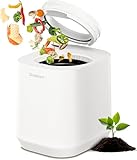 |
Best Indoor Electric | Capacity: 4 liters (≈1.06 gallons) | Intended Use: Indoor countertop food waste composting | Material: Aluminum alloy (plus internal components) | VIEW LATEST PRICE | Read Our Analysis |
| Geobin 246-Gallon Expandable Outdoor Compost Bin | 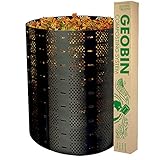 |
Best High-Capacity | Capacity: Expandable to ~246 gallons (4 ft) | Intended Use: Outdoor backyard composting | Material: High-density polyethylene (plastic) | VIEW LATEST PRICE | Read Our Analysis |
| RED FACTOR Stainless Steel Kitchen Compost Bin (1.3 gal) |  |
Countertop Starter Pick | Capacity: 1.3 gallons (5 liters) | Intended Use: Indoor countertop kitchen scrap collection | Material: Stainless steel | VIEW LATEST PRICE | Read Our Analysis |
More Details on Our Top Picks
-
Good Ideas Compost Wizard Dual Tumbler (Black)
If you want a low‑maintenance system that handles two batches at once, this Good Ideas Compost Wizard is the go-to dual-tumbler option. You’ll get two 3.5 cu ft chambers (7 cu ft total) in a black, cylindrical BPA‑free polyethylene shell that boosts heat absorption. It ships fully assembled, has eight twist‑off lids, and includes a compost‑tea collecting base that holds up to 5 gallons. At 30″ x 22″ x 25″ and 33 pounds, it’s compact and pet‑ and child‑friendly. You’ll appreciate the one‑year limited warranty and Amazon’s 30‑day return guarantee for peace of mind.
Our Take: A reliable dual-chamber tumbler for continuous composting. The two-chamber design means you’re always finishing one batch while filling the other — a genuine advantage over single-chamber tumblers that force you to wait. Good for households that generate consistent weekly volumes of kitchen and yard waste. The rotating mechanism stays smooth with occasional lubrication.
- Capacity:7 cu ft (50 gallons) total; two 3.5 cu ft (25 gal) chambers
- Intended Use:Outdoor garden composting (food + yard)
- Material:BPA-free polyethylene plastic
- Odor/Containment Features:Enclosed dual tumblers; lids; compost tea base (controls leaks/odors)
- Ease of Use / Access:Dual tumblers, twist-off lids, fully assembled
- Warranty / Return Support:1 Year limited manufacturer warranty; 30-day return guarantee (retailer)
- Additional Feature:Dual independent chambers
- Additional Feature:Integrated compost-tea base
- Additional Feature:Twist-off chamber lids
-
Hourleey 43-Gallon Dual Chamber Tumbling Compost Bin
Ideal for gardeners who want steady output, the Hourleey 43‑gallon tumbling bin serves as a continuous-use pick for busy yards. You’ll appreciate the dual-chamber design: one side composts while the other accepts fresh scraps, so you always have material maturing. The 360° tumbling action, deep flaps and grooves, plus aeration holes speed breakdown and keep mixes airy. A removable sliding door and large openings make loading and harvesting simple. Built from durable plastic with a high‑grade metal frame, it’s corrosion- and weather-resistant for outdoor use. It handles kitchen and yard waste efficiently and comes with manufacturer warranty options.
Our Take: Solid alternative to the Good Ideas at a similar capacity. The 43-gallon dual-chamber handles a reasonable weekly output and the construction holds up to outdoor use. If the Good Ideas is unavailable or priced higher, the Hourleey performs comparably. Look for models with UV-stabilized plastic if you’re in a high-sun climate.
- Capacity:43 gallons
- Intended Use:Outdoor garden/yard and kitchen scraps
- Material:Plastic body with high-grade metal frame
- Odor/Containment Features:Enclosed tumblers with aeration holes and sealed doors
- Ease of Use / Access:360° tumbling, large openings and removable/sliding doors
- Warranty / Return Support:Manufacturer warranty available; 30-day return guarantee (retailer)
- Additional Feature:360° tumbling rotation
- Additional Feature:Sliding access doors
- Additional Feature:Metal support frame
-
4L Electric Countertop Composter — Odorless Auto-Cleaning
Small kitchens and busy cooks will love this compact 4L electric countertop composter that’s optimized as the top indoor electric option for quick, low-odor processing. You’ll convert scraps into fertilizer using high-temperature drying, grinding, and cooling—shrinking waste up to 90% in hours. The Ouaken J6001A’s aluminum-alloy, 4-liter bucket fits countertops, runs under 40 dBA, and offers Crush, Ferment, and Clean modes with an easy-touch interface and transparent lid. A large carbon filter handles odors for about five months. Empty the dishwasher-safe bucket before cycles and use Clean mode for maintenance. Warranty and a 30-day return option are included.
Our Take: An important clarification: this is a food waste processor, not a traditional composter. It grinds and dehydrates scraps quickly (1–4 hours per cycle) and produces a material that can be mixed into soil or added to an outdoor pile. The 4L cycle capacity is small — suited to single-person households. The odorless claim is accurate when the unit is maintained properly. Worth it if you have no outdoor composting option; less essential if you do.
- Capacity:4 liters (≈1.06 gallons)
- Intended Use:Indoor countertop food waste composting
- Material:Aluminum alloy (plus internal components)
- Odor/Containment Features:Carbon filter, sealed lid, odorless cycles
- Ease of Use / Access:Touch controls, transparent lid, removable/dishwasher-safe bucket, auto-clean mode
- Warranty / Return Support:Manufacturer warranty available; 30-day return guarantee (retailer)
- Additional Feature:High-temp drying/grind
- Additional Feature:Multiple operation modes
- Additional Feature:Auto-cleaning cycle
-
Geobin 246-Gallon Expandable Outdoor Compost Bin
For gardeners with large volumes of yard waste, the Geobin 246-gallon composter offers a high-capacity, expandable solution. You’ll appreciate its lightweight, cylindrical design made from premium high-density polyethylene that won’t degrade or leach into your compost. It expands up to four feet for roughly 246 gallons (also listed as 216 gallons), assembles easily with included connection keys, and maximizes ventilation to speed decomposition. At about seven pounds and black in color, it’s durable for long-term outdoor use. Made in the USA by Presto Products and warrantied against defects, it’s a practical choice for backyard recycling.
Our Take: For serious volume composting, the Geobin’s expandable design handles large quantities of yard waste that tumblers can’t accommodate. This is the right tool for fall leaf collection, large garden trimmings, or high-volume composting. It’s not a tumbler — you’ll need to turn the pile manually — but at this scale, a static bin is more practical anyway.
- Capacity:Expandable to ~246 gallons (4 ft)
- Intended Use:Outdoor backyard composting
- Material:High-density polyethylene (plastic)
- Odor/Containment Features:Wrapped/ventilated enclosure (designed ventilation for odor control)
- Ease of Use / Access:Easy assembly with connection keys; expandable panels
- Warranty / Return Support:Manufacturer warranty against defects referenced; 30-day return guarantee (retailer)
- Additional Feature:Expandable height/volume
- Additional Feature:High-ventilation design
- Additional Feature:Lightweight packable panels
-
RED FACTOR Stainless Steel Kitchen Compost Bin (1.3 gal)
If you want a tidy, no-fuss indoor composter, consider this countertop starter pick. You’ll get a 1.3-gallon stainless steel bin (8.7 x 7.3 x 10.8 in) that’s seamless, rust- and chip-resistant, and easy to wipe clean. The ventilated lid and dual activated-carbon filters neutralize odors—spares included—so you can stash fruit scraps, coffee grounds, eggshells, and teabags without stink, even in warm conditions. A soft-grip handle makes carrying simple. RED FACTOR is a small brand offering attentive customer support, with Amazon’s 30-day return policy and manufacturer warranty options if you need exchanges or refunds.
Our Take: The kitchen collection stage determines how reliably organic material enters the composting pipeline. A 1.3-gallon stainless bin near the prep area reduces the effort per contribution to near zero — scraps go in without a trip to an outdoor bin. The pipeline principle: make the first step so easy it happens automatically. Stainless is more hygienic than plastic at this stage because it doesn’t absorb odors from moist organic material over time.
- Capacity:1.3 gallons (5 liters)
- Intended Use:Indoor countertop kitchen scrap collection
- Material:Stainless steel
- Odor/Containment Features:Lid with ventilation holes and activated carbon dual-filter system
- Ease of Use / Access:Simple lift-off lid, soft-grip handle, countertop-friendly
- Warranty / Return Support:Manufacturer/customer support refund/exchange policy; 30-day return guarantee (retailer)
- Additional Feature:Seamless stainless steel
- Additional Feature:Dual activated-carbon filters
- Additional Feature:Soft-grip carrying handle
Factors to Consider When Choosing Mill Compost Bin Ideas
Choosing between a tumbler, a static bin, and an electric processor involves understanding what you actually need the end product to do. At 6BC, the question we start with is simple: are you trying to process waste or produce compost? The answer changes everything.
Bin Size And Capacity
Because your compost needs and space vary, choosing the right bin size and capacity makes the system work for you rather than forcing you to work around it. Estimate weekly food and yard waste volume so the bin holds what you produce—small kitchens often need 3–5 liters while yard-heavy setups may require 100+ gallons to avoid constant emptying. Think about throughput: larger or dual-chamber designs let you compost continuously (one side curing while the other fills). Measure where the bin will sit, including clearance for lids and doors, since dimensions matter beyond gallon ratings. Consider weight and who’ll move or service it; full bins get heavy. Lastly, match capacity to how often you need finished compost—small for occasional use, larger for regular garden applications.
Material And Durability
Although material choice might seem secondary to size, it determines how long your compost bin will last and how well it protects your pile from weather, pests, and odors. Choose high-density or BPA-free polyethylene for outdoor bins — they resist UV, weathering, and won’t leach chemicals. For countertop units, pick stainless steel or aluminum alloys that resist rust and tolerate humid kitchens while staying easy to clean. Check construction: seamless bodies or single-sheet designs and reinforced frames prevent cracking, warping, or collapse under load. Balance weight and portability: lighter plastics with sturdy frames are easier to move yet structurally stable. Finally, verify maintenance needs — filter replacements, dishwasher-safe parts, or scheduled cleaning — to maintain durability and odor control.
Aeration And Ventilation
Get airflow right: your compost bin should supply oxygen through multiple vents or internal features so aerobic microbes can work efficiently and you don’t end up with foul, anaerobic pockets. Choose a design with balanced vent size—enough openings to feed oxygen but protected by fine mesh or baffles to keep pests out and prevent excess drying. Look for internal mixing or tumbling mechanisms that expose fresh material to air and cut composting time, and consider fins, raised cores, or turning access to oxygenate the pile’s center, not just the surface. Keep moisture like a wrung-out sponge (40–60%) so pore space stays open; overly wet material collapses and chokes airflow.
Ease Of Operation
When you’re choosing a mill-style compost bin, favor designs that make daily use effortless—wide lids or removable doors speed loading and unloading, smooth tumbling or accessible turning handles cut the work of mixing, and clear capacity markings or separate chambers help you manage batches without guesswork. You’ll want lightweight, durable materials and ergonomic handles or a convenient mounting height so lifting and hauling don’t strain your back. Prioritize bins with simple mechanisms that won’t jam or need frequent repair; reliability saves time. Built-in collection trays or base reservoirs for compost tea and easy drainage simplify maintenance and prevent messy spills. Overall, pick a unit that fits your workflow so composting becomes a quick, consistent habit rather than a chore.
Odor Control Systems
Good odor control starts with design choices that keep smells sealed and aerobic — pick bins with tight lids, built-in vents paired with activated carbon or charcoal filters, and easy-access aeration (tumbling or turning) so you can keep the pile oxygenated. You should also manage moisture—keep material as damp as a wrung-out sponge (40–60%)—and maintain a balanced carbon-to-nitrogen ratio around 25–30:1 to discourage anaerobic decay. Choose bins with removable leachate trays or dedicated compost-tea collection to prevent liquid pooling and odor. Top fresh scraps with biofilter layers like sawdust, finished compost, or wood chips to absorb smells and speed curing. Together, these features trap volatile compounds, support aerobic microbes, and keep your composting area smelling fresh.
Placement And Accessibility
Beyond odor control, thoughtful placement and easy access make your compost system work smoothly and get used regularly. Place your bin on well-drained, level ground with partial sun (4–6 hours) so microbes stay active without drying or overheating. Keep it 10–30 feet from your kitchen or main waste source to encourage frequent use while keeping pests and smells manageable. Sit the bin on soil or gravel, not concrete, so drainage and beneficial organisms can reach the pile. Leave 18–36 inches of clearance around the unit for turning and accessing contents, and provide an unobstructed path at least 30–36 inches wide to carry buckets and remove finished compost safely. These steps make composting convenient and effective.
Maintenance And Cleaning
Although composting is low-maintenance by nature, you’ll want a bin that makes routine care quick and straightforward. Empty and turn chambers regularly—at least every 1–2 weeks for active tumblers—to prevent anaerobic pockets and odors. Choose bins with removable components you can rinse monthly; scrub stubborn residue with a brush and mild detergent to deter mold and pests. Pick models with accessible ventilation holes and aeration fins so you can trim wet material or bedding and keep airflow strong. If the unit uses carbon or odor filters, inspect and replace them per manufacturer guidance (typically 3–6 months) or when smells return. Sanitize tools, buckets, and countertop collectors after each emptying with diluted bleach (1 tbsp per quart) or vinegar, then air-dry.
Tumblers vs. Electric Composters: Which One Fits Your Life
Both approaches reduce food waste — but they fit different situations.
Choose a tumbler if: you have outdoor space, you generate kitchen and yard waste regularly, and you want to produce finished compost for your garden. Tumblers are faster than static piles (2–8 weeks to finished compost) and handle volume that electric units can’t touch.
Choose an electric processor if: you live in an apartment with no outdoor access, you want to reduce food waste going to landfill immediately, or you compost lightly and the convenience outweighs the cost and energy use. Understand that the output is a soil amendment rather than finished compost — it performs best when mixed into soil or added to an outdoor pile, not applied directly as compost.
Tumbler management tip: tumblers work best when you alternate adding fresh material (nitrogen) with dry carbon material (cardboard, dried leaves). An all-kitchen-scraps tumbler tends to get wet and slow. A balanced mix breaks down faster and smells better.
Sizing Your Composting Pipeline to Organic Waste Volume
A useful benchmark: a 2-person household generates roughly 3–5 lbs of compostable kitchen scraps per week; a family of four, 8–12 lbs. A 43-gallon tumbler can handle this volume when combined with yard waste carbon material. Match the outdoor bin capacity to 10–12 weeks of combined kitchen and yard waste volume — enough material to fill the bin through an active decomposition cycle without either running out of material or overflowing the bin. Pipeline efficiency improves significantly when the kitchen collection bin is emptied on a consistent weekly schedule rather than when it’s full.
For the biological composting stage that processes what the kitchen bin collects, our guide to worm compost bins covers vermicomposting as an indoor alternative to outdoor tumblers for households that generate kitchen scraps without significant yard waste.
For the full decision framework across all tools and formats in this category, see our composting guide.