

Choosing a composting system is a lifestyle fit decision before it’s a product decision. A household that generates mostly kitchen scraps in a kitchen-adjacent apartment needs a different solution than a suburban gardener producing both kitchen waste and yard clippings. At 6BC Botanical Garden, managing composting across multiple scales — from countertop kitchen collection through tumblers to large open pile systems — taught us that the system people actually use consistently outperforms the theoretically optimal system that adds friction to daily workflow. Match the format to how you actually live, not to ideal composting conditions.
This roundup covers both ends of the spectrum: compact countertop options for apartment cooks and larger outdoor tumblers for serious gardeners. The right choice depends on whether you’re collecting scraps to transport elsewhere, or actively breaking down material in your own yard. Here’s our honest take on each.
| Good Ideas EZCJR-BLK 7-Cubic-Foot Compost Wizard Jr. Black |  |
Best For Small Yards | Capacity: 7 cubic feet (approx. 52.4 gallons) | Intended Use: Outdoor composting (small yards/urban gardeners) | Material: Post-industrial polyethylene (98%) | VIEW LATEST PRICE | Read Our Analysis |
| EPICA 1.3 Gallon Stainless Steel Countertop Compost Bin |  |
Sleek Countertop Choice | Capacity: 1.3 gallons | Intended Use: Indoor countertop food-scrap composting | Material: High-grade stainless steel | VIEW LATEST PRICE | Read Our Analysis |
| Werph 43-Gallon Dual-Chamber Compost Tumbler (Green) |  |
Fast Dual-Chamber Performer | Capacity: 43 gallons | Intended Use: Outdoor tumbling composting for garden waste | Material: Plastic (BPA-free) | VIEW LATEST PRICE | Read Our Analysis |
| Utopia Kitchen 1.3G Stainless Steel Countertop Compost Bin |  |
Reliable Odor Control | Capacity: 1.3 gallons | Intended Use: Indoor countertop food-scrap composting | Material: Stainless steel | VIEW LATEST PRICE | Read Our Analysis |
| 2.6 Gallon Hanging Compost Bin for Kitchen | 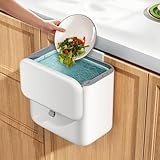 |
Space-Saving Hang-Up | Capacity: 2.6 gallons | Intended Use: Indoor countertop/under-sink/hanging food-scrap bin | Material: ABS plastic | VIEW LATEST PRICE | Read Our Analysis |
| Barnyard Designs 1.2 Gallon Countertop Compost Bin (Mint) | 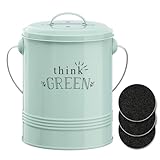 |
Filtered Compact Classic | Capacity: 1.2 gallons | Intended Use: Indoor countertop/under-protected-outdoor composting | Material: Galvanized steel | VIEW LATEST PRICE | Read Our Analysis |
| VEVOR 43-Gal Dual Chamber Compost Tumbler Bin |  |
Heavy-Duty Gardener’s Pick | Capacity: 43 gallons (162.7 liters) | Intended Use: Outdoor/yard/kitchen garden composting for families | Material: PP (polypropylene) body + steel components | VIEW LATEST PRICE | Read Our Analysis |
More Details on Our Top Picks
-
Good Ideas EZCJR-BLK 7-Cubic-Foot Compost Wizard Jr. Black
If you’ve got limited outdoor space, this compact tumbler fits neatly and excels for small yards. You’ll get a 7-cubic-foot Good Ideas EZCJR-BLK Compost Wizard Jr., a 22 x 23.5 x 30-inch, 27-pound unit made in the USA from 98% post-industrial polyethylene. It’s virtually animal-proof, FDA-approved around kids and pets, and arrives assembled. You’ll turn it weekly using drum handles or the 12-inch lid, add scraps through a large opening, and place it in sun—the black color speeds heating. It’s an affordable, entry-level tumbler that produces nutrient-rich compost for urban and weekend gardeners.
Our Take: If you want outdoor composting in a tight backyard, this is a solid entry point. The tumbling mechanism keeps pests out and speeds breakdown by aerating the pile with each rotation. At 7 cubic feet it’s right-sized for a household of two to four — large enough to matter, small enough not to overwhelm. Our caution: tumblers produce compost fastest when you fill them in one go rather than adding scraps daily. If that matches how you garden, this works well.
- Capacity:7 cubic feet (approx. 52.4 gallons)
- Intended Use:Outdoor composting (small yards/urban gardeners)
- Material:Post-industrial polyethylene (98%)
- Odor Control / Ventilation Feature:Vent holes; black color absorbs heat (vented tumbler)
- Access / Loading Method:Large opening / two-part tumbler with removable base
- Portability / Placement:Free-standing outdoor unit (place in sunny spot); 27 lb
- Additional Feature:Tumbler with handles
- Additional Feature:12-inch rotating lid
- Additional Feature:Made in USA
-
EPICA 1.3 Gallon Stainless Steel Countertop Compost Bin
For small kitchens and everyday cooks, the Epica 1.3‑gallon stainless bin is a sleek countertop choice that keeps scraps contained. You’ll appreciate the one-piece high-grade stainless steel body—rust-, leak- and scratch-resistant—with no welded seams to fail. Its airtight lid plus a replaceable activated-charcoal filter control odors for months, making indoor food-scrap collection tidy between compost pickups. At 7.16″ diameter by 11″ tall, it holds several days’ worth of scraps without dominating your counter. It won’t leach chemicals, and it’s easy to clean. Backed by manufacturer support and media recognition, it’s a durable, practical daily compost solution.
Our Take: The countertop option we point people toward most consistently. Stainless doesn’t absorb odors over time the way plastic does, the charcoal filter does real work, and the capacity is right for a one- to two-person kitchen. If you’re buying one countertop bin, this is the one.
- Capacity:1.3 gallons
- Intended Use:Indoor countertop food-scrap composting
- Material:High-grade stainless steel
- Odor Control / Ventilation Feature:Airtight lid + replaceable activated-charcoal filter
- Access / Loading Method:Top-opening airtight lid (countertop bin)
- Portability / Placement:Countertop placement (small, lightweight)
- Additional Feature:Replaceable charcoal filter
- Additional Feature:One-piece stainless body
- Additional Feature:Featured in media
-
Werph 43-Gallon Dual-Chamber Compost Tumbler (Green)
Gardeners who want quick, continuous composting will love this fast dual-chamber performer. You get a 43-gallon hexagonal tumbler (27L x 25.2W x 34.3H inches) that’s lightweight at 18 pounds and durable in BPA-free plastic. Flip the 360-degree drum and built-in deep fins mix waste evenly, so you won’t need hand stirring. Use one chamber while the other cures; expect finished compost in about 4–6 weeks. A sliding door makes additions simple, and included gloves protect your hands. Assembly’s quick—most parts preassembled, 34 screws, roughly 10 minutes—and it’s weather resistant for year-round use.
Our Take: A strong option for gardeners who want continuous output — while one chamber finishes, you’re filling the other. The 43-gallon dual capacity handles a reasonable weekly volume of kitchen and yard waste combined. The gloves included are a practical touch. If you generate enough material to keep both chambers rotating, this earns its keep.
- Capacity:43 gallons
- Intended Use:Outdoor tumbling composting for garden waste
- Material:Plastic (BPA-free)
- Odor Control / Ventilation Feature:Vents and tumbling action for aeration
- Access / Loading Method:Sliding door panel for easy access to chamber
- Portability / Placement:Free-standing outdoor tumbler (18 lb)
- Additional Feature:Dual-chamber system
- Additional Feature:360° tumbling mechanism
- Additional Feature:Includes gloves
-
Utopia Kitchen 1.3G Stainless Steel Countertop Compost Bin
Small-space cooks will love this compact bin, and its integrated charcoal filter gives reliable odor control. You’ll appreciate the 1.3‑gallon capacity and sleek stainless‑steel cylinder that fits on counters or tucks under sinks. A tight‑fitting lid and charcoal cartridge trap smells while you collect peels, coffee grounds, and scraps between compost pickups. At just 2 pounds and 8.4 × 7 × 11 inches, it’s easy to move and won’t dominate your prep space. Wash it regularly to prevent buildup; the durable stainless construction resists scratches and chips. Check Utopia Kitchen’s warranty details for long‑term peace of mind.
Our Take: Solid budget alternative to the Epica. Functionally very similar — same capacity, same stainless construction, integrated charcoal filter. The Epica has a slight edge in build quality, but if price is a factor this is a reliable substitute.
- Capacity:1.3 gallons
- Intended Use:Indoor countertop food-scrap composting
- Material:Stainless steel
- Odor Control / Ventilation Feature:Tight-fitting lid + charcoal filter
- Access / Loading Method:Top-opening lid (countertop bin)
- Portability / Placement:Countertop or under-sink placement (compact)
- Additional Feature:Integrated charcoal filter
- Additional Feature:Tight-fitting lid design
- Additional Feature:Under-sink compatible
-
2.6 Gallon Hanging Compost Bin for Kitchen
Keep your countertop clear with this 2.6-gallon hanging compost bin that saves space by mounting on cabinet doors or walls. You’ll get a Gleynest ABS plastic bin (10.2×6.3×9.4 in, 1.3 lb) that’s polished white and rectangular, usable freestanding or hung. It includes a hook and an adhesive hook—no tools required—and fits cabinet doors under 1 inch. The lidded design flips up or slides down to contain odors without charcoal, and a retaining ring keeps bags secure. You can wipe it clean, avoid bending while emptying, and use it across kitchen, RV, office, or laundry spaces.
Our Take: The hanging design is genuinely useful for very small kitchens where every counter inch counts. Our caution: 2.6 gallons without a charcoal filter means you need to empty it every 2–3 days to keep odors manageable. If you’re disciplined about that, it works. If you tend to let scraps sit, go with a filtered option.
- Capacity:2.6 gallons
- Intended Use:Indoor countertop/under-sink/hanging food-scrap bin
- Material:ABS plastic
- Odor Control / Ventilation Feature:Lidded design claiming odor control (no charcoal filter)
- Access / Loading Method:Top lid with flip or slide opening; can hang or stand
- Portability / Placement:Versatile—hang on cabinet door, stick to wall, or countertop/under-sink
- Additional Feature:Cabinet-door hanging hook
- Additional Feature:Adhesive mounting option
- Additional Feature:Bag retention ring
-
Barnyard Designs 1.2 Gallon Countertop Compost Bin (Mint)
If you want a filtered compact classic for your kitchen counter, this mint Barnyard Designs bin fits neatly and quietly. You’ll appreciate its 1.2‑gallon capacity and cylindrical, space‑saving shape that holds daily scraps without dominating your prep area. The galvanized steel resists rust while the fresh airflow lid and included smell‑absorbing filters cut odors; swap filters about every three months. Lift the lid by its handle, remove the dishwasher‑safe inner bucket for easy transport and rinsing, then hand wash the outer bin. At 7″ by 9.5″ and just 1.43 pounds, it’s practical, portable, and low‑maintenance.
Our Take: The aesthetics are the main draw here — the mint finish looks intentional on a counter rather than utilitarian. The included extra filters are a thoughtful touch. Long-term, galvanized steel isn’t as corrosion-resistant as true stainless with high-acid scraps, but for occasional composters this holds up fine.
- Capacity:1.2 gallons
- Intended Use:Indoor countertop/under-protected-outdoor composting
- Material:Galvanized steel
- Odor Control / Ventilation Feature:Fresh airflow lid + replaceable filters included
- Access / Loading Method:Removable inner bucket for easy emptying
- Portability / Placement:Countertop or protected outdoor use (compact, 1.43 lb)
- Additional Feature:Extra replacement filters
- Additional Feature:Removable inner bucket
- Additional Feature:Dishwasher-safe inner
-
VEVOR 43-Gal Dual Chamber Compost Tumbler Bin
For avid gardeners who need a workhorse composter, the VEVOR 43‑Gal Dual Chamber is a heavy-duty gardener’s pick. You’ll appreciate its 43‑gallon dual chambers so you can compost one batch while adding fresh scraps to the other. Rotate the octagonal drum 360° for thorough mixing; with regular tumbling and airflow vents, finished compost can appear in 4–6 weeks. Built from BPA‑free PP and Q235B steel, it’s UV‑resistant and weatherproof, holding up to 110 lbs. Two sliding doors seal out pests, and the package includes gloves, screws, nuts, end caps, a screwdriver, and instructions for assembly.
Our Take: A capable heavy-duty option with good capacity. The dual-chamber design gives you continuous output, and the construction is solid. Compared to the Werph at similar capacity, the VEVOR tends to be sturdier in the frame — worth the slight price difference if you’re composting seriously year-round.
- Capacity:43 gallons (162.7 liters)
- Intended Use:Outdoor/yard/kitchen garden composting for families
- Material:PP (polypropylene) body + steel components
- Odor Control / Ventilation Feature:Strategically placed vents and sealed doors for pest/odor control
- Access / Loading Method:Two detachable sliding doors with large openings (dual chambers)
- Portability / Placement:Free-standing outdoor tumbler (21.9 lb)
- Additional Feature:Steel-reinforced frame
- Additional Feature:110 lb max load
- Additional Feature:Included assembly tools and screws
Factors to Consider When Choosing Compost Bin Ideas
The choice between countertop collection and outdoor composting changes which factors matter most. At 6BC, we see both systems fail for the same reason: people pick bins that don’t match their actual routine. Here’s what to evaluate before buying.
Bin Size Needs
Choosing the right compost bin size means matching capacity to how much kitchen and garden waste you actually produce, accounting for processing speed, available space, and how you’ll handle a heavy, full container. If your household and garden produce lots of scraps, aim for 40+ gallon outdoor bins; small yards or apartments do well with 1–7 gallon countertop units or compact ~20 gallon outdoor options. Pick dual-chamber or tumblers if you want continuous throughput and quicker turnover. Measure the placement—countertop, under-sink, balcony, or yard—so the bin fits and vents properly. Check weight and stability: large bins can exceed 100 lbs loaded, so verify the base supports it and you can rotate or move it. Plan for seasonal peaks with extra storage or a backup bin.
Material Durability
Because your bin faces sun, rain, wind and curious critters, prioritize durable materials and hardware that resist weathering and wear. Choose UV-resistant plastics, stainless steel, or powder-coated metals to prevent cracking, rust, and sun damage. If you compost kitchen scraps, pick BPA-free or food-safe materials to avoid chemical leaching. Favor heavier, thicker-walled constructions—higher-gauge metal or thicker plastic panels—so the bin resists wind, animal interference, and keeps warmth for microbes. Check for weatherproof seals and corrosion-resistant fasteners to stop moisture intrusion and joint rust. Look for impact-resistant designs and replaceable parts—doors, lids, vents—so you can repair localized damage without replacing the whole unit. Those choices extend service life and keep composting reliable.
Indoor Vs Outdoor
If you mostly cook and have limited outdoor space, an indoor bin keeps scraps neat and close at hand; if you generate lots of yard waste or want faster hot composting, an outdoor system gives the capacity, airflow, and insulation you need. Choose indoor bins (1–3 gallons) for convenience: tight lids, charcoal filters, compact, leak-resistant buckets fit under sinks or on countertops and make scrap collection simple before transfer. Pick outdoor composters when you need volume and thermal performance: tens to hundreds of gallons withstand weather and animals, retain heat, and speed decomposition when you manage greens, browns, and turning. Think about placement and upkeep—indoor units need frequent emptying and filter changes; outdoor units need space, occasional turning, and sunlight or insulation to stay active.
Odor Control Options
Whether you keep scraps in a tidy indoor pail or a large outdoor tumbler, controlling odors will shape which bin features work best for you. Choose activated carbon filters or charcoal inserts for indoor pails—they adsorb volatile compounds and cut smells for weeks to months. Airtight lids and seals limit odor escape, but you’ll need to empty more often to avoid anaerobic, sour smells. Ventilation holes or mesh and regular mixing or tumbling promote aerobic decomposition, preventing foul, oxygen-starved odors by distributing moisture and microbes evenly. Finally, balance greens and browns—aim for about 2–3 parts browns to 1 part greens—to stop ammonia-like scents. Match these options to your routine, space, and how often you’ll turn or empty the bin.
Pest Resistance Features
How do you keep curious critters from turning your compost into their next meal? Choose a bin with a tight-sealing lid and no large gaps to block rodents, raccoons, and insects. Pick durable, chew- and claw-resistant materials like thick polypropylene, steel, or high-density polyethylene with reinforced fasteners so animals can’t breach it. Favor elevated or sealed bases and pest-proof access points—sliding doors or bolted panels—to stop ground-level entry and burrowing. Ensure vents are small, screened, or baffled to provide airflow while keeping flies and tiny insects out. Look for designs with locking mechanisms or padlock compatibility and smooth exterior surfaces so animals can’t get purchase to pry openings. These features keep your compost secure and effective.
Ease Of Use
Want a compost setup you’ll actually use every week? Pick a bin with large openings or a removable lid so adding scraps and scooping finished compost is quick and strain-free. Choose models that arrive pre-assembled or need minimal assembly; tumblers or rotating drums cut the manual turning effort. Match capacity to your household: a 1–3 gallon countertop pail is perfect for daily use, while a 40+ gallon outdoor tumbler reduces emptying frequency but needs more space. Look for clear indicators and simple vents to manage airflow and moisture without constant troubleshooting. Prefer lightweight, durable materials and ergonomic handles or bases so lifting, rotating, and moving the bin stays comfortable for typical household users.
Composting Speed
You’ve picked a bin that’s easy to use—now consider how fast it’ll turn scraps into usable compost. To speed things up, aim for thermophilic temperatures (about 104–140°F / 40–60°C); higher internal heat accelerates breakdown and can cut months to weeks. Turn or tumble the pile weekly to boost oxygen and favor aerobic microbes. Chop or shred scraps so smaller particles increase surface area and decompose faster. Keep the carbon-to-nitrogen ratio near 25–30:1—too much woody carbon slows decomposition; too much nitrogen risks odors. Maintain moisture around 40–60%: moist but not soggy. Choosing a bin that supports heat retention, easy turning, and size for shredding helps you get finished compost promptly.
Maintenance Requirements
When choosing a compost bin, consider the day-to-day chores it will demand: some systems need weekly turning or tumbling while passive designs let you walk away for longer stretches, but indoor setups add filter swaps and washing to your routine. Check how often you’ll need to agitate the pile—weekly for active bins, occasional aeration for passive models to avoid odors. Match emptying frequency to your habits: countertop pails may need daily or every-few-days attention; large outdoor tumblers can sit for weeks. Factor in cleaning and charcoal filter replacement (usually every 3–6 months) and plan periodic washing. Account for pest- and weather-related checks—secure lids, clear vents—and seasonal tasks like insulating, relocating, or tweaking moisture and C:N mixes.
Setting Up a System That Actually Works
The most effective composting setups pair a countertop collection bin with an outdoor finishing system. Your kitchen bin holds scraps for a few days; your outdoor bin — tumbler or static — is where breakdown actually happens.
Match bin size to your output. A single person generates roughly 2–3 lbs of kitchen scraps per week. A family of four generates 8–12 lbs. Underbuy on the countertop bin (easier to empty more often) and invest in adequate outdoor capacity.
Balance your inputs. Composting works on a carbon-to-nitrogen ratio. Kitchen scraps (fruit, vegetables, coffee) are nitrogen-heavy. Balance them with dry carbon material — cardboard, dried leaves, shredded paper — to prevent a wet, smelly pile and speed breakdown.
Tumblers vs. static bins. Tumblers produce compost faster and resist pests better. Static bins handle higher volumes with less management. Neither is universally better — the right choice depends on how much you generate and how often you want to engage with the pile.
Which Composting System Fits Your Lifestyle
The best composting system is the one that gets used. Tumblers suit gardeners who want faster results and don’t want to turn piles manually — but require outdoor space and a deliberate carbon-nitrogen balance to work well. Open bins suit high-volume yard waste where turning is practical. Vermicomposting suits apartment dwellers with kitchen scraps only. Countertop collection bins are the first step for any system — they determine whether scraps actually reach the composter. Choose the format that reduces friction to the zero point: the step you’ll actually do every day.
For gardeners who want to understand the tumbling mechanics that speed decomposition, our guide to rotating compost bins covers how rotation frequency and aeration interact to produce finished compost faster than static pile methods.
For the full decision framework across all tools and formats in this category, see our composting guide.