

The primary specification error in backyard compost bin selection is choosing capacity by gut feeling rather than by the actual volume of organic material a household generates. A household of four composting kitchen scraps and moderate yard waste generates roughly 150–250 gallons of material per year — enough to fill a 43-gallon tumbler three to five times through active decomposition cycles. Undersizing means constant overflow or premature harvesting; oversizing means the bin never accumulates enough material to reach the thermal mass required for active hot composting. At 6BC Botanical Garden, sizing our composting infrastructure to actual material volumes rather than optimistic estimates produced consistent, high-quality finished compost with no overflow management problems.
The options have gotten genuinely good. Dual-chamber tumblers handle continuous composting without pest issues; large static bins process high volumes of yard waste; and mid-size single-chamber units hit the sweet spot for most home gardeners. The right choice depends on your yard size, how much material you generate, and how involved you want to be. Here’s what we’d recommend in each scenario.
| VIVOSUN Dual-Rotating 43 Gallon Outdoor Tumbling Composter |  |
Continuous Composting | Capacity: 43 gallons | Access Type: Dual-chamber rotating with doors | Material: Polypropylene (PP) plastic body + metal frame/galvanized steel | VIEW LATEST PRICE | Read Our Analysis |
| 45-Gallon Dual Chamber Compost Tumbler with Orange Door |  |
Heavy-Duty Capacity | Capacity: 45 gallons (2 x 22.5) | Access Type: Dual-chamber rotating with removable doors/openings | Material: Extra-thick polypropylene + powder-coated steel | VIEW LATEST PRICE | Read Our Analysis |
| Geobin 246-Gallon Expandable Outdoor Compost Bin | 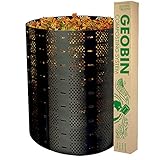 |
High-Volume Solution | Capacity: 246 gallons (expandable to 4 ft) | Access Type: Top/open expandable cylindrical (no doors listed) | Material: High-density polyethylene (HDPE) | VIEW LATEST PRICE | Read Our Analysis |
| Redmon 65-Gallon Outdoor Compost Bin with Lift-Off Lid |  |
Easy-Access Bin | Capacity: 65 gallons | Access Type: Top lift-off lid + 4-door access | Material: Plastic (80% post-consumer recycled material) | VIEW LATEST PRICE | Read Our Analysis |
| FCMP IM4000 Dual Chamber Compost Tumbler (37 Gallon) | 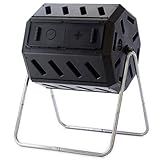 |
Eco-Friendly Choice | Capacity: 37 gallons | Access Type: Dual-chamber rotating with wide openings/removable doors | Material: UV-inhibited polypropylene (100% post-consumer recycled resin) + galvanized steel | VIEW LATEST PRICE | Read Our Analysis |
| JupiterForce 80-Gallon Garden Compost Bin (BPA-Free) |  |
Low-Maintenance Option | Capacity: 80 gallons | Access Type: Top lid loading + sliding bottom door | Material: BPA-free polypropylene (PP) | VIEW LATEST PRICE | Read Our Analysis |
| Miracle-Gro Dual Chamber 55.4 Gallon Compost Tumbler |  |
Fast-Processing Pick | Capacity: 55.4 gallons (2 x 27.7) | Access Type: Dual-chamber rotating with loading/unloading openings | Material: BPA-free/food-grade UV-protected plastic + galvanized/alloy steel components | VIEW LATEST PRICE | Read Our Analysis |
More Details on Our Top Picks
-
VIVOSUN Dual-Rotating 43 Gallon Outdoor Tumbling Composter
If you want steady, continuous composting for a busy yard, this dual-chamber tumbler keeps materials moving. You’ll use one 43-gallon side while the other finishes, giving you a steady supply of compost without hand mixing. The octagonal, 26.25×23.6×36.5-inch barrel spins 360°, and deep fins on eight panels break clumps as you rotate. Air vents and fin design boost oxygen for faster fermentation. Built with a premium metal frame, corrosion-resistant PP plastic and galvanized steel parts, it’s sturdy for outdoor use. Gloves and four ABS claws are included for safe, easy handling and planting.
Our Take: Our top recommendation for consistent backyard composting. The dual-chamber design gives you continuous output, the rotating mechanism stays smooth, and 43 gallons handles most households’ combined kitchen and yard waste. The VIVOSUN’s build quality holds up better than many competitors at this price point — specifically the chamber seals and the rotation axle, which are the points that tend to fail first on cheaper tumblers.
- Capacity:43 gallons
- Access Type:Dual-chamber rotating with doors
- Material:Polypropylene (PP) plastic body + metal frame/galvanized steel
- Ventilation / Aeration:Air vents and deep fins for aeration
- Outdoor Durability / Weather Resistance:Corrosion- and weathering-resistant construction
- Continuous/Batch Composting Capability:Dual chambers for alternating/continuous composting
- Additional Feature:Garden gloves included
- Additional Feature:ABS planting/digging claws
- Additional Feature:Twin rotating chambers
-
45-Gallon Dual Chamber Compost Tumbler with Orange Door
Tackle regular kitchen and yard waste with this 45-gallon dual-chamber tumbler built for heavy-duty capacity. You’ll appreciate its hexagonal, extra-thick polypropylene drum and powder-coated steel frame that resists sun and corrosion. Two 22.5-gallon chambers let you alternate batches: compost one while starting another. Deep fins and aeration holes boost oxygen and break up materials so you get rich compost faster. Large removable orange doors simplify loading and harvesting; the unit spins smoothly without rocking. Assembly’s straightforward with buckles and few screws (about 30 minutes). Marcytop backs the MPCB02 with customer support and warranty options.
Our Take: A strong alternative to the VIVOSUN at similar capacity. The high-visibility orange doors make loading and harvesting intuitive, which matters more than it sounds when you’re working with gloves on. Build quality is comparable. If you find this priced lower than the VIVOSUN, it’s a legitimate substitute.
- Capacity:45 gallons (2 x 22.5)
- Access Type:Dual-chamber rotating with removable doors/openings
- Material:Extra-thick polypropylene + powder-coated steel
- Ventilation / Aeration:Aeration holes and deep fins for oxygen circulation
- Outdoor Durability / Weather Resistance:Polypropylene protects from sun; powder-coated steel resists corrosion
- Continuous/Batch Composting Capability:Dual chambers for alternating/continuous composting
- Additional Feature:Quick ~30-minute assembly
- Additional Feature:Powder-coated steel frame
- Additional Feature:Large removable doors
-
Geobin 246-Gallon Expandable Outdoor Compost Bin
For gardeners who need a high-volume solution, the Geobin 246-Gallon expandable composter gives you massive capacity in a simple, ventilated cylinder. You’ll appreciate the expandable design that reaches roughly 4 feet and holds about 246 gallons of yard waste, made from durable, inert high-density polyethylene that won’t leach or degrade. It’s lightweight (7 pounds), easy to assemble with included connection keys, and its maximum ventilation speeds decomposition so you turn scraps into usable compost faster. Made in the USA by Presto Products and warrantied against defects, the genuine GEOBIN is a practical backyard recycling solution.
Our Take: This is the choice for high-volume composting — fall leaves, large garden cleanup, or heavy kitchen output from a large household. 246 gallons means you can build a pile large enough to generate the internal heat that speeds decomposition and kills weed seeds. No tumbling mechanism, so plan to turn it manually every week or two. The expandable design is genuinely useful for seasonal variation in material volume.
- Capacity:246 gallons (expandable to 4 ft)
- Access Type:Top/open expandable cylindrical (no doors listed)
- Material:High-density polyethylene (HDPE)
- Ventilation / Aeration:Maximum ventilation design
- Outdoor Durability / Weather Resistance:HDPE formulated for long-term outdoor use (made in USA)
- Continuous/Batch Composting Capability:Expandable single-chamber design for ongoing composting (continuous outdoor composting)
- Additional Feature:Expandable cylindrical design
- Additional Feature:Extremely lightweight (7 lb)
- Additional Feature:High-density polyethylene
-
Redmon 65-Gallon Outdoor Compost Bin with Lift-Off Lid
Gardeners who want low-effort composting will like this easy-access bin with a lift-off lid and four-door removal. You’ll get a 65‑gallon, trapezoid-shaped bin made from durable plastic (80% post‑consumer recycled material) that stands 26 x 26 x 30.75 inches and weighs about 15 pounds. Vent holes keep the pile aerated; the lift-off top makes adding scraps simple, while the four doors let you retrieve finished compost without disturbing the rest. It’s weather resistant, tool-free to assemble, and handles kitchen and yard waste to produce nutrient-rich compost. A one‑year limited warranty backs the unit.
Our Take: The most straightforward option in this roundup — a well-designed static bin with a lift-off lid that makes both adding material and harvesting finished compost simple. At 65 gallons it’s large enough to build heat, and the four-panel design allows good airflow. Our recommendation for gardeners who want outdoor composting without the complexity of a tumbler.
- Capacity:65 gallons
- Access Type:Top lift-off lid + 4-door access
- Material:Plastic (80% post-consumer recycled material)
- Ventilation / Aeration:Multiple vent holes for aeration and gas release
- Outdoor Durability / Weather Resistance:Weather-resistant plastic designed for outdoor conditions
- Continuous/Batch Composting Capability:Top-loading with multi-door access supports ongoing additions and removals (batch/continuous use)
- Additional Feature:Lift-off top lid
- Additional Feature:Four-door access panels
- Additional Feature:80% recycled plastic
-
FCMP IM4000 Dual Chamber Compost Tumbler (37 Gallon)
Need steady compost without constant babysitting — this eco-friendly choice fits busy households who want continuous, low-waste recycling. You’ll get a 37-gallon octagonal tumbling composter (30 x 28 x 36 in., 28 lb) with dual chambers so one side cures while you fill the other. Made in Canada from 100% post-consumer, BPA-free, UV-inhibited polypropylene on a galvanized-steel frame, it resists fading and corrosion. Deep fins, aeration holes, handholds, and wide removable doors make loading, turning, and clump breaking simple. Rotate 5–6 turns every 2–3 days; compost can be ready in about two weeks. One-year limited warranty.
Our Take: A well-regarded tumbler with a slightly smaller footprint than the 43-gallon options — right for smaller backyards or lighter composting needs. The recycled plastic construction holds up to UV exposure well, and the FCMP has a reputation for producing compost relatively quickly. A solid choice if you want a smaller, lighter tumbler.
- Capacity:37 gallons
- Access Type:Dual-chamber rotating with wide openings/removable doors
- Material:UV-inhibited polypropylene (100% post-consumer recycled resin) + galvanized steel
- Ventilation / Aeration:Aeration holes for oxygen flow
- Outdoor Durability / Weather Resistance:UV-inhibited material; galvanized steel resists corrosion (made in Canada)
- Continuous/Batch Composting Capability:Dual chambers for alternating/continuous composting
- Additional Feature:Made in Canada
- Additional Feature:100% post-consumer resin
- Additional Feature:Built-in handholds
-
JupiterForce 80-Gallon Garden Compost Bin (BPA-Free)
If you want a simple, hands-off composter, the JupiterForce 80-gallon bin is a low-maintenance option that’s built to last. You’ll get a lightweight, rectangular 300 L container made from BPA-free polypropylene that’s frost- and rainproof for year-round use. Four vents per side boost airflow so materials break down faster, while the top lid makes loading easy and the sliding bottom door lets you harvest finished compost without digging. It assembles tool-free in four steps, includes gloves, and sits directly on soil (no base). At 23.2″ x 22.4″ x 31.9″ and 11.9 lb, it’s practical and portable.
Our Take: Straightforward high-capacity static bin. At 80 gallons you have room to process significant volumes of yard waste. BPA-free construction is worth noting for those composting food scraps. Simple design means there’s not much to fail — these last a long time with minimal maintenance. Good for gardeners who want volume without the tumbler price.
- Capacity:80 gallons
- Access Type:Top lid loading + sliding bottom door
- Material:BPA-free polypropylene (PP)
- Ventilation / Aeration:Four vents per side for air circulation
- Outdoor Durability / Weather Resistance:Frost- and rainproof; weather-resistant PP
- Continuous/Batch Composting Capability:Top loading + sliding door allows ongoing additions and removal (continuous use)
- Additional Feature:Sliding bottom door
- Additional Feature:Tool-free four-step assembly
- Additional Feature:Includes gloves
-
Miracle-Gro Dual Chamber 55.4 Gallon Compost Tumbler
For busy gardeners seeking quick results, the Miracle-Gro Dual Chamber is a fast-processing pick for steady compost. You’ll appreciate its 55.4-gallon hexagonal tumbler—two 27.7-gallon chambers—so you can load fresh scraps into one side while the other cures. Rotate the easy-turn drum a few times every few days and you’ll get finished compost in about 4–6 weeks without hand mixing. Built from UV-protected, food-grade plastic with a galvanized steel base and alloy components, it’s pest-resistant with side locks and tight seals. At 37.4″ x 23.5″ x 29.5″ and all-season durability, it’s great for high-volume home use.
Our Take: The Miracle-Gro name brings expectations of quality and this tumbler generally delivers. The 55.4-gallon dual-chamber design handles more material than the 43-gallon alternatives, and the construction is solid. If you’re generating above-average volumes and want a tumbler that can keep up, this is worth the additional investment.
- Capacity:55.4 gallons (2 x 27.7)
- Access Type:Dual-chamber rotating with loading/unloading openings
- Material:BPA-free/food-grade UV-protected plastic + galvanized/alloy steel components
- Ventilation / Aeration:Designed for airflow; aeration promotes fast decomposition
- Outdoor Durability / Weather Resistance:UV-protected plastic and steel base suitable for all-season use
- Continuous/Batch Composting Capability:Dual chambers for alternating/continuous composting
- Additional Feature:Tight pest-proof seals
- Additional Feature:Fast 4–6 week composting
- Additional Feature:Galvanized steel base
Factors to Consider When Choosing Backyard Compost Bin Ideas
Backyard composting decisions are primarily about matching capacity to output and pest resistance to your local context. At 6BC, we’ve found that people almost always underestimate how much they’ll compost once they start — so sizing up is rarely a mistake.
Bin Capacity Needs
Although your yard and kitchen output will shape the right size, matching bin capacity to your household’s actual waste stream prevents both overfilling and wasted space. Estimate weekly output—small households often produce 20–40 gallons, larger families or heavy yard work may need 60+ gallons—and pick a bin that fits that rhythm. Make sure volume supports your approach: hot/fast systems need enough mass (roughly 3–5 cubic feet, ~22–40 gallons per batch) to retain heat, while slow systems can use smaller or multiple bins. If you want continuous composting, size bins to hold an active batch plus a curing batch. Factor space and weight: 50+ gallon units get heavy and may need fixed placement or sturdy tumblers. Plan for seasonal peaks with extra or modular capacity.
Composting Method Type
Sizing your bin to match your household’s output sets the stage for choosing the composting method that fits your time, space, and effort preferences. Decide between passive systems (static bins or piles needing occasional turning) and active systems (tumblers or aerated bins for frequent rotation): active gives usable compost in weeks to months, passive takes months to a year. Pick batch versus continuous: batch lets you fill and finish one pile for hot, thorough decomposition; continuous systems let you add fresh material while older material cures. Match method to feedstock—hot composting with good C:N and turning rapidly handles kitchen scraps and kills seeds; cold composting or vermicomposting suits small volumes and low maintenance. Consider space, throughput, access, and how much labor you’ll commit.
Material Durability Options
Because your bin will sit outdoors through sun, rain, and critters, pick materials that actually stand up to those conditions: UV-stabilized polypropylene or HDPE plastics resist fading and cracking, powder-coated or galvanized steel gives strong, rust-resistant structure, and recycled resins can be a durable, eco-friendly choice if they’re thick and well-built. Choose impact-resistant, BPA-free plastics and reinforced frames—steel supports help tumblers and heavy loads avoid warping. For metals, verify quality coatings to prevent rust in wet climates. With recycled plastics, check wall thickness and manufacturing grade; thin panels degrade faster despite UV inhibitors. Consider weight: heavier, thicker construction resists wind and animal interference and handles seasonal temperature swings better. Match material choice to your climate, budget, and maintenance willingness.
Ventilation And Aeration
Often overlooked, ventilation and aeration make or break how quickly and cleanly your compost turns into usable soil. You’ll want a bin with multiple vents or perforations to keep conditions aerobic and prevent foul, anaerobic odors. Internal mixing features or fins that create air channels distribute oxygen through the pile, speeding decomposition and cutting compost time. Balance pore space and moisture: too many large vents dry material, too few trap odors. Choose passive aeration (breathable materials, ground contact) or active options like tumblers or rotating chambers to boost oxygen and shorten processing from months to weeks. Sit the bin on soil or provide airflow and drainage beneath so beneficial organisms can enter and excess moisture can escape.
Ease Of Maintenance
Good airflow makes maintenance easier, but you’ll also want a bin that’s straightforward to use day-to-day. Choose systems with large removable lids or doors so you can add scraps and retrieve finished compost without digging. Prefer tumblers or rotating barrels, or bins with built-in aeration, to cut down on manual turning and speed decomposition. Look for smooth, durable materials and wide openings so larger chunks come out easily and cleaning residue is simple. Clear airflow management—vent holes or adjustable vents—keeps odors low and reduces interventions. Consider capacity and handling weight: separate chambers or smaller removable segments let you manage batches without lifting heavy, compacted material. These features keep maintenance quick, safe, and consistent.
Pest And Weather Protection
When you pick a compost bin, prioritize designs that block pests and withstand the elements so your pile stays productive and low-maintenance. Look for secure, tight-fitting lids or doors with pest-resistant seals and fine-mesh vents to stop rodents, raccoons, and insects while still allowing oxygen flow. Choose durable, weather-resistant materials—UV-stabilized plastic or powder-coated metal—to resist sun damage, rust, and freeze–thaw cracking. Elevate or site the bin on well-draining ground and include screened openings to balance ventilation and moisture control. In cold climates, use insulated or larger-volume bins to retain heat for microbial activity, or plan winter management like adding more browns to prevent freezing and odor-driven scavengers. Favor raised bases and tight latches to minimize access points and smells.
Budget And Warranty
Although upfront price matters, you should weigh both initial cost and long-term value when choosing a compost bin—set a realistic budget (under $50 for simple bins, $50–$200 for durable tumblers, $200+ for high-capacity systems), compare materials and expected lifespans, and check warranty length and claim procedures so you’re not surprised by replacement or repair costs down the road. Factor total ownership costs: assembly tools, replacement parts, maintenance, and accessories like aeration tools or a base. Compare materials—cheap plastics may last 3–10 years in sun, while powder‑coated steel or heavy‑duty plastics cost more but last longer. Look for at least a one‑year limited warranty covering defects and clear claim steps. If budget‑tight, prioritize features that reduce future costs, like easy‑access doors and durable ventilation.
Getting Your Backyard Compost System Working
The first few months of backyard composting involve learning what your pile needs. Here’s what we consistently see make the difference.
Location matters more than most guides admit. Choose a spot with partial shade — full sun dries the pile out; full shade slows microbial activity. Convenient to your kitchen door so you’ll actually use it. Not right next to a fence or neighbor’s property until you know how well you manage odors.
The carbon-to-nitrogen ratio is the core skill. Nitrogen-rich greens (kitchen scraps, fresh grass clippings, coffee grounds) plus carbon-rich browns (dried leaves, cardboard, wood chips) in roughly a 2:1 brown-to-green ratio produces a pile that breaks down fast and doesn’t smell. Most odor problems are caused by too many greens and not enough browns.
Water in dry weather. The pile should feel like a wrung-out sponge. If you pick up a handful and no moisture is detectable, water it. A dry pile simply stops decomposing.
Know when it’s done. Finished compost looks and smells like dark, rich soil — earthy, not rotten. No recognizable food or plant pieces. Crumbly when you squeeze it. Apply it to beds in fall or early spring before planting.
How to Calculate the Right Bin Capacity for Your Household
Start with these benchmarks: a 2-person household generates roughly 150 lbs of compostable material annually (kitchen scraps plus light yard waste); a family of four generates 300–400 lbs. Finished compost weighs significantly less than fresh material — volume reduces by 60–75% through the composting process. A 43-gallon tumbler handles roughly 80–100 lbs of input per batch cycle, completing in 4–8 weeks in warm weather. For a 2-person household, a 43-gallon dual-chamber tumbler is typically sufficient; for a family of four with yard waste, 55+ gallons or a second bin running in parallel is more realistic.
For garden-bed-adjacent composting where harvest frequency and proximity to planting matter, our guide to garden compost bins covers the formats and placement strategies that shorten the distance from finished compost to where it’s needed.
For the full decision framework across all tools and formats in this category, see our composting guide.