

Want a greener, weed‑free lawn in 2026? Try Scotts Turf Builder Weed & Feed for broadleaf control, BioAdvanced 5‑in‑1 for season‑long feeding plus crabgrass prevention, Scotts Liquid Lawn Food + Weed Control for fast results with a hose‑connect, Scotts Halts for early‑spring crabgrass prevention, and Spectracide 20‑0‑0 ready‑to‑spray for quick, no‑mess application. Each has specific timing, grass restrictions, and safety steps to follow—keep going to see which fits your yard best.
| Scotts Turf Builder Weed & Feed Lawn Fertilizer | 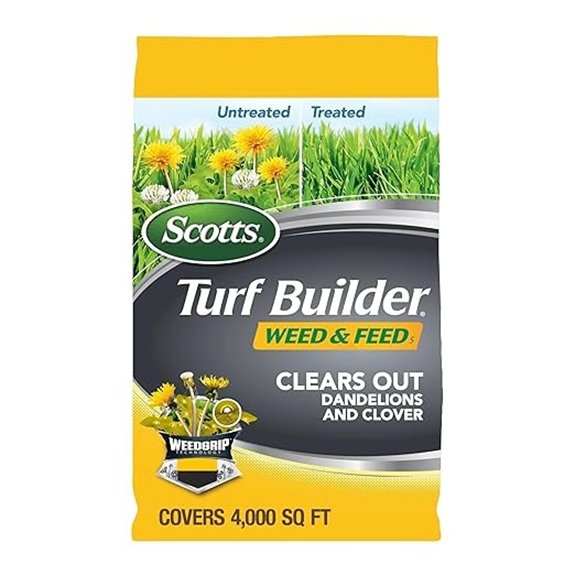 |
All-in-One Control | Form: Granules | Primary Functions: Weed control + fertilize | Coverage (area treated): 4,000 sq. ft. | VIEW LATEST PRICE | Read Our Analysis |
| BioAdvanced 5-in-1 Weed & Feed Granules (9.6 lb) | 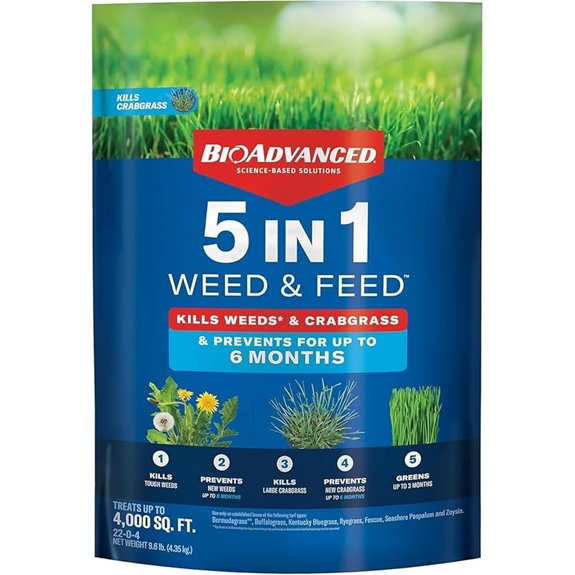 |
Long-Lasting Prevention | Form: Granules | Primary Functions: Weed/crabgrass control + fertilize | Coverage (area treated): Up to 4,000 sq. ft. | VIEW LATEST PRICE | Read Our Analysis |
| Scotts Turf Builder Liquid Lawn Food + Weed Control | 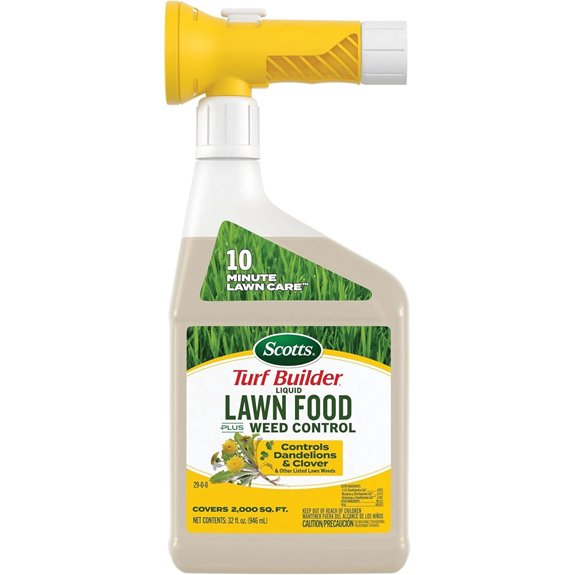 |
Fast-Acting Liquid | Form: Liquid (hose‑connect spray) | Primary Functions: Weed control + fertilize | Coverage (area treated): Up to 2,000 sq. ft. | VIEW LATEST PRICE | Read Our Analysis |
| Scotts Turf Builder Halts Crabgrass Preventer & Fertilizer |  |
Crabgrass Defender | Form: Granules | Primary Functions: Crabgrass prevention + fertilize | Coverage (area treated): 5,000 sq. ft. | VIEW LATEST PRICE | Read Our Analysis |
| Spectracide Weed & Feed 20-0-0 (Ready-to-Spray) (32 fl oz) 1 pack |  |
Ready-to-Spray Convenience | Form: Liquid (ready‑to‑spray) | Primary Functions: Weed control + fertilize | Coverage (area treated): Up to 7,500 sq. ft. | VIEW LATEST PRICE | Read Our Analysis |
More Details on Our Top Picks
-
Scotts Turf Builder Weed & Feed Lawn Fertilizer
If you want a simple, two-in-one solution that kills common broadleaf weeds while feeding the grass to build density, Scotts Turf Builder Weed & Feed is a strong choice. You get an 11.32 lb bag of granules covering 4,000 sq. ft., combining fertilizer with a herbicide that controls over 50 weeds—clover, dandelion, plantain, morningglory and more—using WeedGrip Technology for better contact. Apply to a wet lawn when weeds are actively growing and temps are 60–90°F, no more than twice yearly. Don’t water for 24 hours, keep people and pets off until dust settles, and avoid listed grass types.
- Form:Granules
- Primary Functions:Weed control + fertilize
- Coverage (area treated):4,000 sq. ft.
- Package Size / Weight or Volume:11.32 lb bag
- Target Weeds / Pest Claims:Controls 50+ listed broadleaf weeds (e.g., dandelion, clover)
- Brand / Manufacturer:Scotts (Scotts Miracle‑Gro)
- Additional Feature:WeedGrip Technology
- Additional Feature:Apply to wet lawn
- Additional Feature:Not for St. Augustine
-
BioAdvanced 5-in-1 Weed & Feed Granules (9.6 lb)
Homeowners who want both broad weed control and season-long lawn feeding will find BioAdvanced 5-in-1 Weed & Feed Granules a practical choice, treating up to 4,000 sq ft while killing over 200 weed types and preventing crabgrass for up to six months. You’ll apply the 9.6 lb granules with a broadcast or drop spreader in spring or early summer; the formula uses dicamba and quinclorac to kill dandelions, clover and crabgrass to the root, with crabgrass showing purple within days. Fertilizer greens and feeds for up to three months, promoting thicker turf, but note it’s not sold in HI, NY, FL, or PR.
- Form:Granules
- Primary Functions:Weed/crabgrass control + fertilize
- Coverage (area treated):Up to 4,000 sq. ft.
- Package Size / Weight or Volume:9.6 lb bag (153.6 oz)
- Target Weeds / Pest Claims:Kills 200+ listed weeds + crabgrass (to root)
- Brand / Manufacturer:BioAdvanced (SBM Life Science)
- Additional Feature:Kills crabgrass roots
- Additional Feature:6-month prevention barrier
- Additional Feature:Not sold in HI/NY/FL/PR
-
Scotts Turf Builder Liquid Lawn Food + Weed Control
For small to mid-size yards where you want fast weed control and a quick green-up, Scotts Turf Builder Liquid Lawn Food + Weed Control is a solid choice—you’ll treat up to 2,000 sq. ft. and see weed control start in about 10 minutes. You spray a 2-in-1 formula that targets dandelions, clover, and other listed weeds while feeding grass to promote thicker, greener turf that helps crowd out future weeds. The translucent, reusable hose‑connect applicator reduces plastic waste and accepts refill bottles (sold separately). Use when weeds are actively growing on common lawn grasses for best results.
- Form:Liquid (hose‑connect spray)
- Primary Functions:Weed control + fertilize
- Coverage (area treated):Up to 2,000 sq. ft.
- Package Size / Weight or Volume:32 fl. oz. bottle
- Target Weeds / Pest Claims:Controls listed broadleaf weeds (dandelion, clover, etc.)
- Brand / Manufacturer:Scotts (Scotts Miracle‑Gro)
- Additional Feature:Treats 2,000 sq.ft.
- Additional Feature:10-minute weed control
- Additional Feature:Reusable hose applicator
-
Scotts Turf Builder Halts Crabgrass Preventer & Fertilizer
Gardeners who want a single-step spring solution will find Scotts Turf Builder Halts Crabgrass Preventer with Lawn Food ideal: it prevents crabgrass and several other grassy and broadleaf weeds while feeding your lawn for a quick green-up and stronger roots. You’ll apply granular 30-0-4 fertilizer in early spring to an established bermuda, St. Augustine, zoysia, fescue, bluegrass, ryegrass or blends, avoiding dichondra and bentgrass. Spread dry before germination, water 1/4–1/2 inch within 2–3 days, and use Scotts spreader settings (broadcast 3, drop 6). It blocks seedling weeds but won’t kill mature crabgrass or existing plants.
- Form:Granules
- Primary Functions:Crabgrass prevention + fertilize
- Coverage (area treated):5,000 sq. ft.
- Package Size / Weight or Volume:13.35 lb bag (213.6 oz)
- Target Weeds / Pest Claims:Prevents crabgrass and listed grassy/broadleaf weeds (pre‑emergent)
- Brand / Manufacturer:Scotts (The Scotts Company LLC)
- Additional Feature:30-0-4 fertilizer analysis
- Additional Feature:Pre‑emergent only
- Additional Feature:Covers 5,000 sq.ft.
-
Spectracide Weed & Feed 20-0-0 (Ready-to-Spray) (32 fl oz) 1 pack
If you want a fast, no-mess solution that kills broadleaf weeds while feeding your lawn, Spectracide Weed & Feed 20-0-0 (Ready-to-Spray) is ideal—its QuickFlip hose-end sprayer lets you connect, flip, and treat up to 7,500 sq ft with a single 32 fl oz bottle. You’ll apply a 20-0-0 nitrogen boost while targeting dandelion, clover, chickweed, plantain, knotweed, mallow, purslane and more. The ready-to-spray format saves mixing time; the 32 oz bottle weighs about 2.75 lbs and covers large areas. United Industries backs it with customer support and a manufacturer warranty; retailers may offer a 30-day return guarantee.
- Form:Liquid (ready‑to‑spray)
- Primary Functions:Weed control + fertilize
- Coverage (area treated):Up to 7,500 sq. ft.
- Package Size / Weight or Volume:32 fl. oz. ready‑to‑spray
- Target Weeds / Pest Claims:Kills major broadleaf weeds (dandelion, chickweed, clover, etc.)
- Brand / Manufacturer:Spectracide (United Industries)
- Additional Feature:QuickFlip hose sprayer
- Additional Feature:32 oz treats 7,500 sq.ft.
- Additional Feature:20% nitrogen formulation
Factors to Consider When Choosing Weed and Feed for Lawns
When picking a weed-and-feed, you’ll want to match the product to your grass type so it won’t harm the lawn. Check the label for the weeds it controls, the fertilizer’s nutrient analysis, and the recommended application timing. Also consider weather and soil moisture requirements to ensure effective uptake and avoid runoff.
Grass Type Compatibility
Because different turf species react differently to herbicides and fertilizers, you should confirm a weed‑and‑feed product is labeled safe for your grass—bluegrass, fescue, bermudagrass, zoysiagrass, ryegrass, centipedegrass, and bahiagrass each have specific tolerances, while types like St. Augustine, bentgrass, dichondra, carpetgrass, or lippia can be damaged. Check label restrictions for overseeded or newly sodded/seeded lawns—many products aren’t safe until turf is established. Match temperature and seasonal use recommendations to your grass’s growth cycle: cool‑season and warm‑season grasses need different timing. Verify grass‑specific application limits (frequency and maximum yearly uses) to avoid burning sensitive types. If your lawn has multiple species or varied areas, pick a formulation approved for all or treat incompatible sections separately to prevent harm.
Target Weed Spectrum
Start by matching the product’s target weed list to the actual problems in your lawn: read the label to confirm it names the specific broadleaf and grassy weeds you’re dealing with (dandelion, clover, plantain, crabgrass, etc.). Check whether the product is post-emergent (kills existing weeds) or pre-emergent (prevents seedlings), since they tackle different life stages. Verify if the formulation covers both broadleaf and grassy weeds or focuses on one category; many mixes omit grassy weeds like crabgrass. Note systemic versus contact activity—systemic actives translocate to roots for complete kill, while contact agents only affect visible tissue. Finally, consider how many species are listed and whether the label promises residual protection or a preventive barrier, matching control duration to your lawn’s weed pressure.
Fertilizer Nutrient Analysis
After you match the herbicide spectrum to your weeds, check the fertilizer “analysis” to make sure the nutrient side fits your turf goals. The three numbers (N‑P‑K) show percent nitrogen, available phosphate (P2O5), and soluble potash (K2O). Pick a higher first number for quick green‑up and top growth; include potassium when you want better stress tolerance, root development, and disease resistance. Phosphorus is often low or zero because established lawns usually have enough and some areas restrict P to protect water quality. Prefer products listing slow‑release nitrogen for steadier feeding and lower burn risk versus all quick‑release formulations. Finally, match total nutrient rates to recommended pounds of actual N per 1,000 sq ft per season and never exceed label or local limits.
Application Timing Window
When picking a weed‑and‑feed, time your application to match weed growth and weather so the herbicide and fertilizer can work without stressing the turf. Apply when target weeds are actively growing—spring for cool‑season weeds, late spring to early summer for many warm‑season weeds—so herbicide uptake is maximized. Respect product temperature ranges (commonly about 60°F–90°F) to avoid turf injury. For foliar/contact herbicides, treat a wet lawn (dew or recent watering) and keep off water or rain for at least 24 hours to ensure uptake. For pre‑emergent crabgrass control, apply early spring before soil temperatures rise and before the third or fourth mow, then water in with 1/4–1/2 inch. Don’t exceed labeled frequency and avoid extreme heat, drought, or times when people or pets use the lawn.
Weather And Moisture Needs
You’ve picked the right time of year for treatment; now focus on weather and moisture, which directly affect both herbicide uptake and fertilizer performance. Apply weed-and-feed only when weeds are actively growing and daytime temps are about 60–90°F. Granular weed-and-feed usually needs a wet lawn (dew or recent watering) so granules activate, but don’t water for 24 hours after application so they can adhere and release. Pre-emergents require a dry lawn at application, then about 1/4–1/2 inch of water within 2–3 days to form the soil barrier. Avoid treatments if rain is expected within 24 hours, or if heavy rain or irrigation will occur immediately after, since wash-off or dilution reduces effectiveness. Don’t treat during extreme heat, drought stress, freezes, or heavy moisture events.
Safety For Pets People
Because people and pets spend time on your lawn, prioritize safety when picking and using a weed-and-feed product: read the label for re-entry times (often 24 hours), note whether it’s granular or liquid (granules can stick to paws; sprays leave residues), and keep children and animals off treated areas until the product specifies or residues have settled. Store products in original containers, locked and out of reach, and follow disposal instructions to prevent accidental ingestion. Avoid treating before heavy rain and restrict access until dusts settle or sprays dry per the label. If exposure or ingestion occurs, have the product name and active ingredients ready, follow on-label first-aid guidance, and contact poison control or your veterinarian immediately for next steps.
Spreader And Applicator Settings
Keeping people and pets safe also means applying products correctly, so pay close attention to spreader and applicator settings before you treat the lawn. Use the spreader setting listed on the label and match your tool—broadcast, drop, or hand‑held—to hit the recommended rate per 1,000 sq ft. Calibrate: measure a known area, run the spreader, and adjust until the weight applied equals the label rate. Walk at a steady pace and overlap each pass by roughly one‑third to prevent strips. For hose‑end or liquid applicators, follow flow and dilution exactly. Don’t apply granules when it’s windy or grass is wet with heavy clippings. Clean equipment after use, record settings and date, and obey label watering or reapplication instructions.
For the full lawn care decision framework — soil testing, fertilization timing, weed control, mowing equipment, and engine maintenance — see our lawn care guide.